

Souk El Had: a first-timer’s guide to the biggest market in Morocco
Thirteen hectares, a dozen gates, several thousand stalls and half of Agadir doing its shopping. Souk El Had is not a show for visitors; it is the city’s pantry, and that is exactly why it is worth a morning.
- 13 habehind the walls
- 3,000+stalls, some say 6,000
- 12gates, more or less
- Mondaythe one day it closes
A market that moved
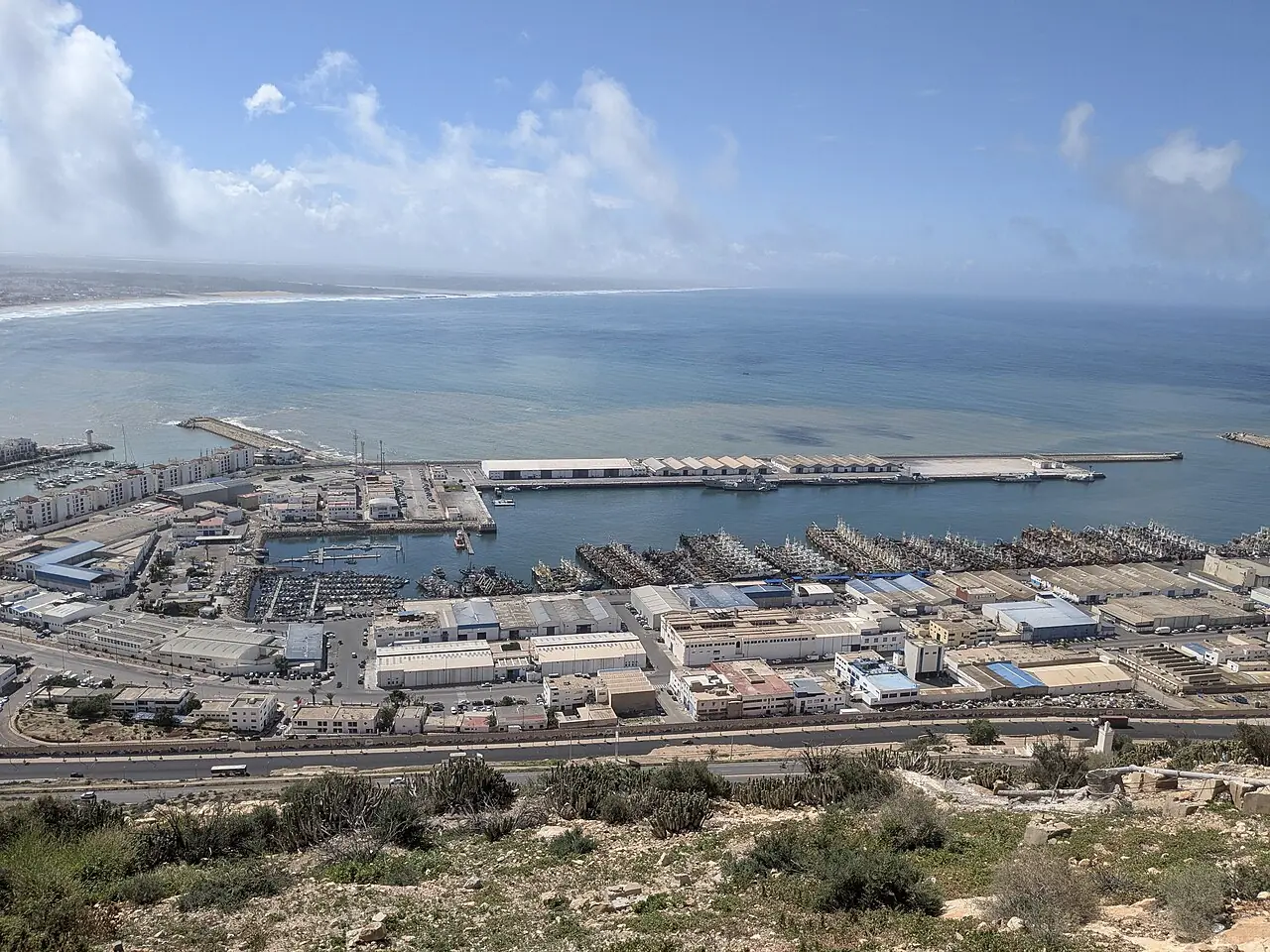
The name means the Sunday market, and for a long time that is what it was: a weekly souk in the Talborjt quarter, in the heart of the old town. On 29 February 1960 an earthquake destroyed most of Agadir in fifteen seconds and killed around fifteen thousand people. The city was rebuilt further south, in concrete and wide avenues, and the market was given its own walled enclosure in the Sidi Youssef quarter, on avenue Abderrahim Bouabid, about three kilometres from the centre and the beach. It has grown ever since. Today the walls run around roughly thirteen hectares; sources count between three thousand and six thousand stalls and between nine and thirteen gates, which tells you how hard it is to count.
When to go
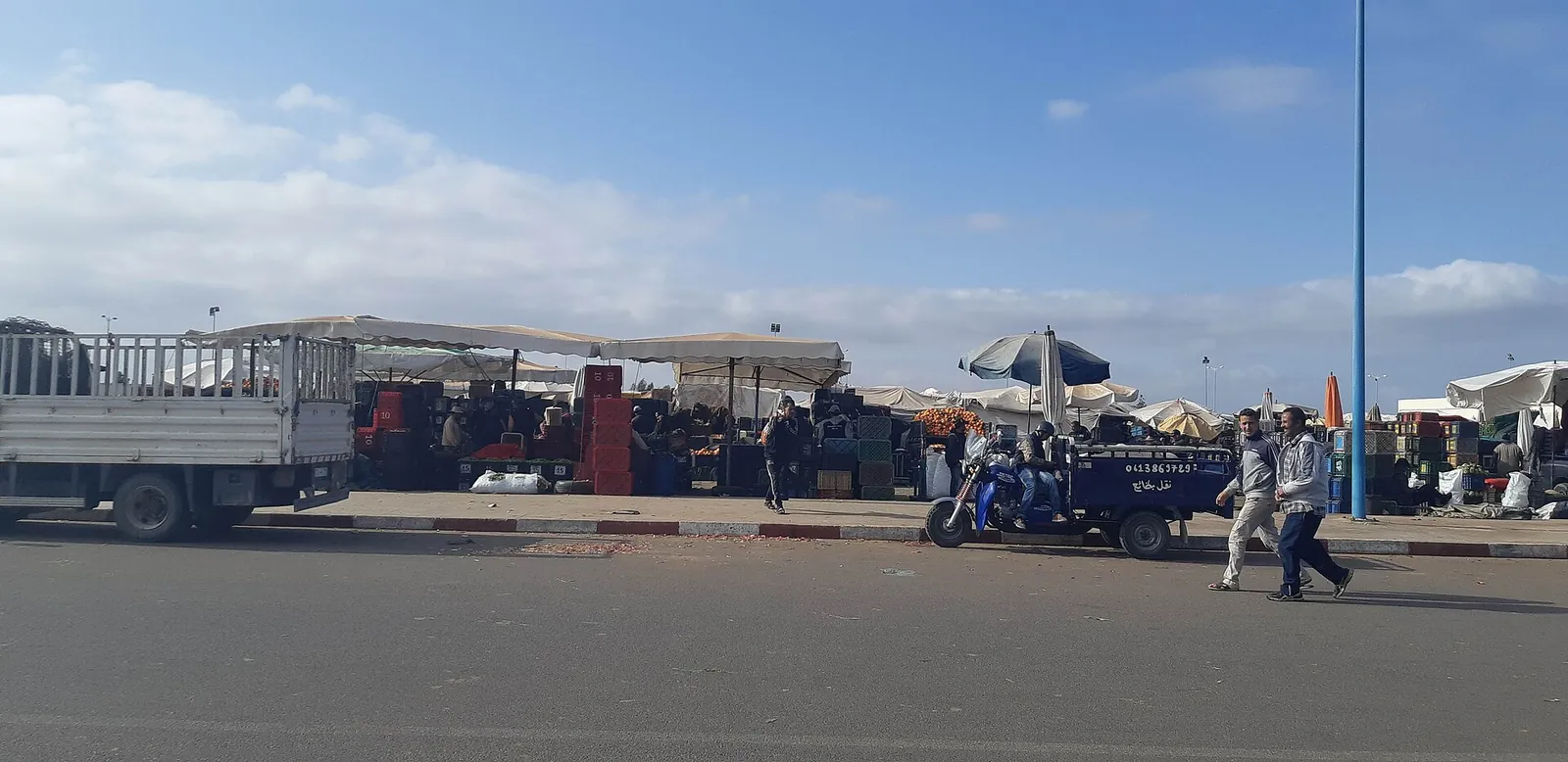
The souk opens every day except Monday, which is cleaning day, from around nine in the morning until about half past eight at night. Sunday is still the big day, when families come from the whole region and the alleys are shoulder to shoulder; Saturday is nearly as lively. If you want space and the best light for photographs, go on a weekday morning between nine and eleven. Some stalls close for an hour or two on Friday afternoon for prayers. The souk also closes on the days of Eid.
It is not a tourist souk. Families from Agadir do their weekly shopping here, which is why the prices are honest and the produce is extraordinary.
Which gate
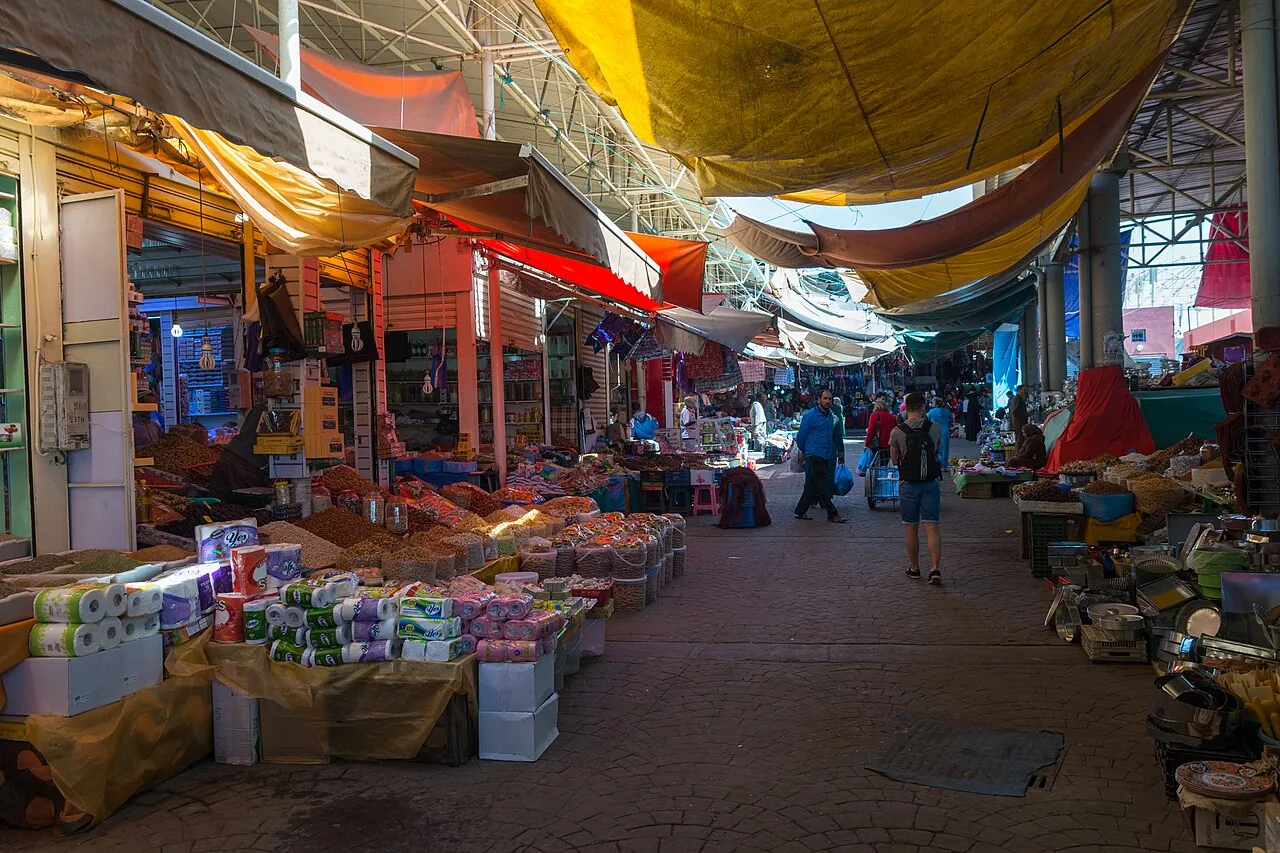
Each gate opens onto a different world, and the first rule of the souk is to remember the number of the gate you came in by. Broadly: the food halls, with fruit, vegetables, olives, spices and the butchers, fill the side nearest the avenue; the crafts, clothes, shoes and household goods spread through the middle and the far side; furniture, carpets and the larger workshops sit toward the back. Ask any stallholder for “bab” plus your number and they will point you home.
What to buy, and roughly what to pay
- Spices. Cumin, paprika, turmeric, ginger, cinnamon and ras el hanout, the house blend of each merchant. A hundred grams of a good blend is 20 to 40 MAD. Saffron comes from Taliouine, three hours inland; real saffron is sold by the gram and is never cheap.
- Argan oil and amlou. Buy from a women’s cooperative if you can; in the souk, look for the cooperative labels and expect 150 to 250 MAD for a half litre of culinary oil. Amlou, the argan, almond and honey paste, is the thing to bring home.
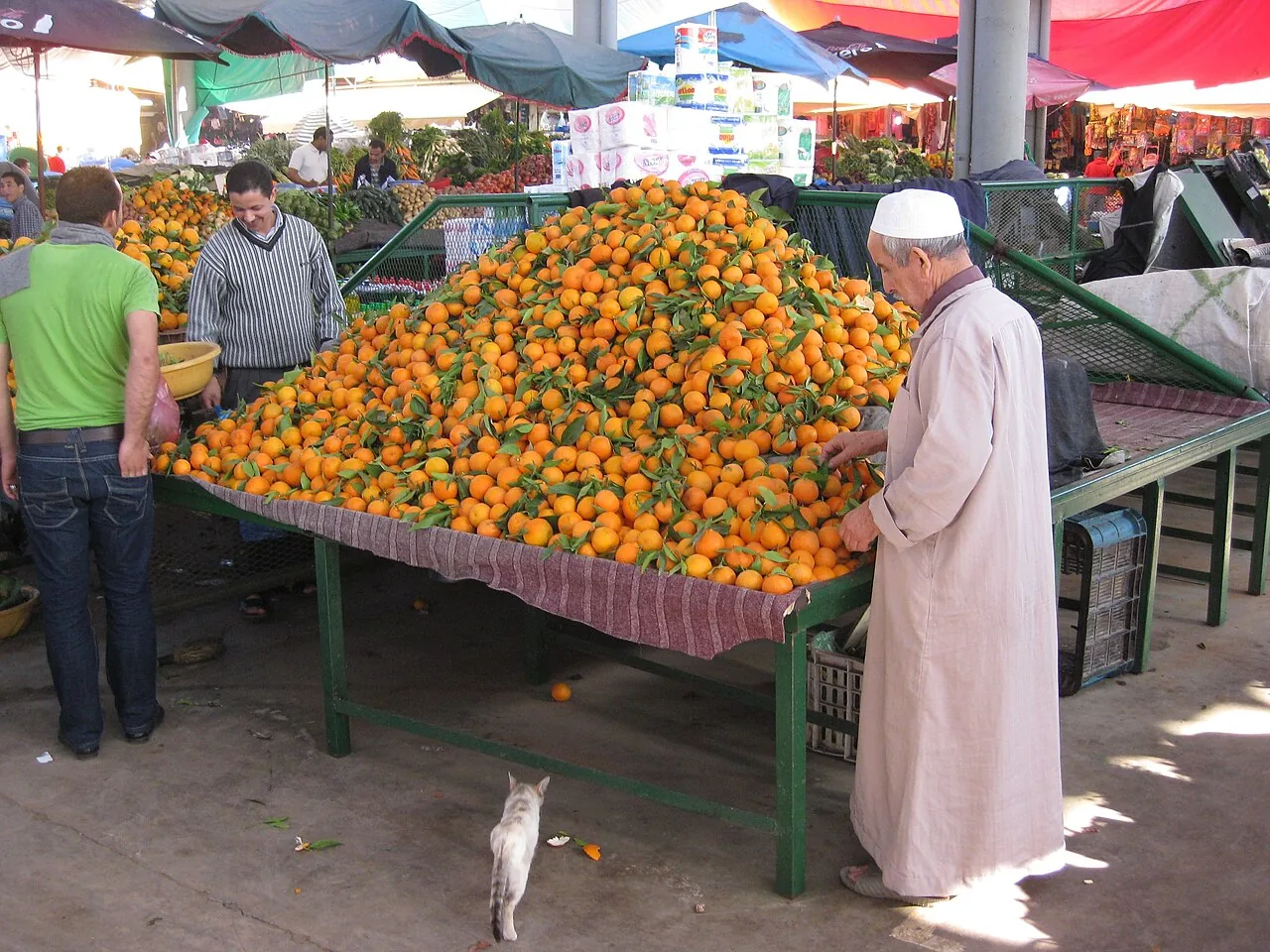
- Olives and preserved lemons. Twenty kinds of olives, sold by the kilo from barrels, 20 to 40 MAD. Preserved lemons are what makes a chicken tagine taste like Morocco.
- Dates, almonds, dried figs by the kilo. Taste before you buy; the merchant expects it.
- Babouches and leather. Leather slippers from 80 to 200 MAD depending on the leather and the stitching. Bags and poufs too.
- Carpets. Berber rugs from the Anti-Atlas and the Middle Atlas, from a few hundred dirhams for a small kilim to several thousand for a wool piece. Only buy one if you have time and a cup of tea in you.
- Pottery and lanterns. Tagine dishes from Safi (buy the unglazed ones for cooking), tea glasses, brass lanterns.
How to bargain
Food has a price and you pay it, or at most ask for a small reduction on a large quantity. Crafts are different: the first price is an opening, not an insult. Ask, offer around half, and move toward the middle with a smile; if it does not work, thank them and walk away, which often brings the price down behind you. Pay in cash, carry small notes, and never feel you have to buy because you were shown a hundred carpets. That is part of the game for them too.
Eating in the souk
There are small grills inside the food halls where sardines come straight off the coals with bread and a tomato salad for less than 40 MAD, and juice stalls that will press you a glass of orange or sugar cane while you wait. Outside the gates the avenue has cafés for a coffee and a seat.
Staying safe and comfortable
The souk is safe and the merchants are used to visitors. Keep your bag in front of you in the crowded alleys, dress as you would for a village (shoulders and knees covered is appreciated), bring water, and leave the drone and the big camera bag at the house. Photographs of people are welcome if you ask first; photographs of the spice pyramids are welcome anyway.
The practical part
Before you go
- Getting there
- From Moonlight about 30 minutes by car, from Blue Whale about 25, along the N1 and avenue Hassan II; follow the signs to the souk. Several car parks surround the walls. By bus, line 32 from Tamraght to Agadir costs 5.50 MAD, then a petit taxi. Or take our guided day, Saturdays and Sundays, 300 MAD with transport.
- When
- Every day except Monday, about 9:00 to 20:30. Weekday mornings for calm, Sunday for the full show.
- Budget
- Entry is free. A lunch of grilled sardines is under 40 MAD; a bag of spices, olives and amlou to take home 150 to 300 MAD.
Further reading