

Taghazout: the village behind the wave
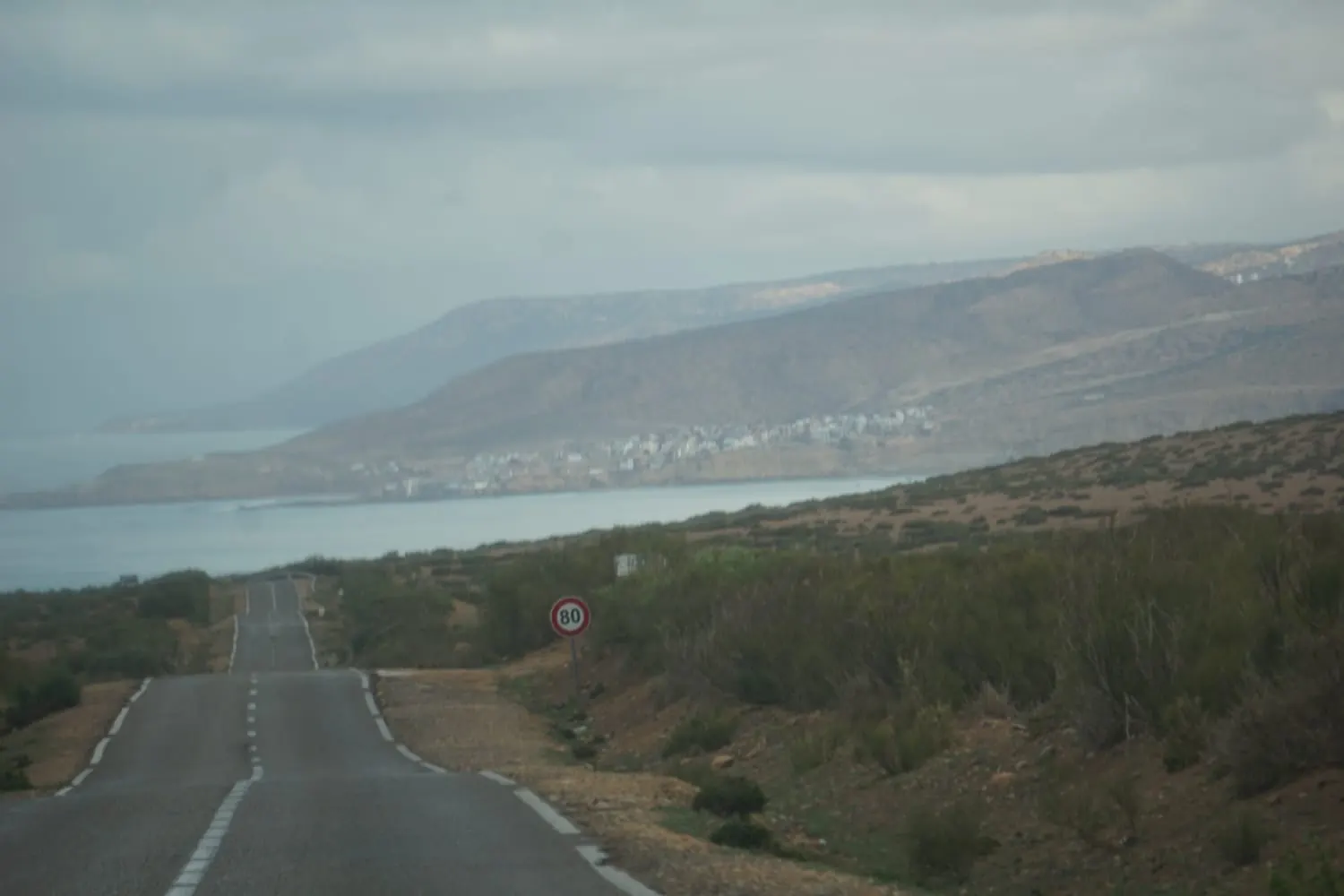
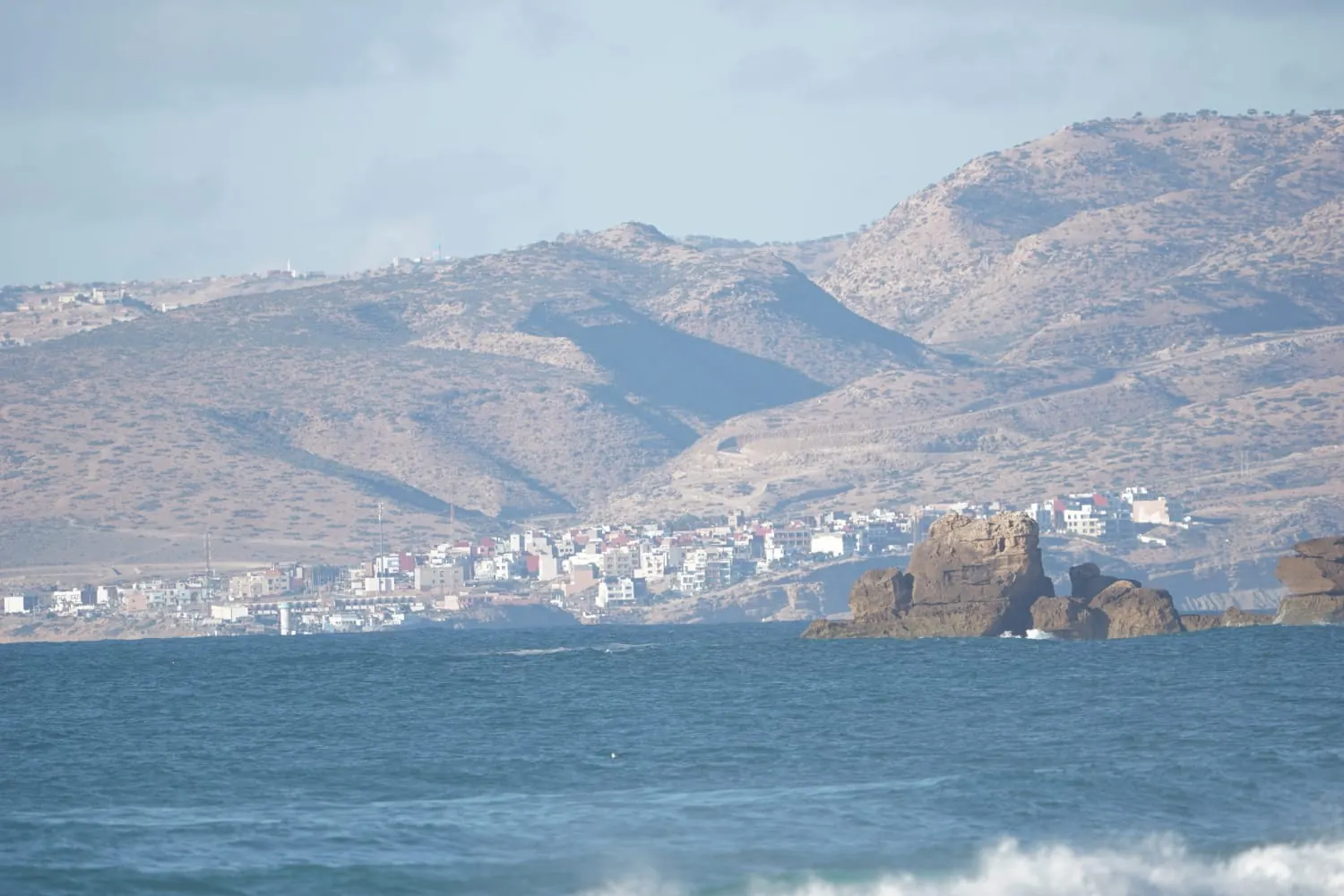
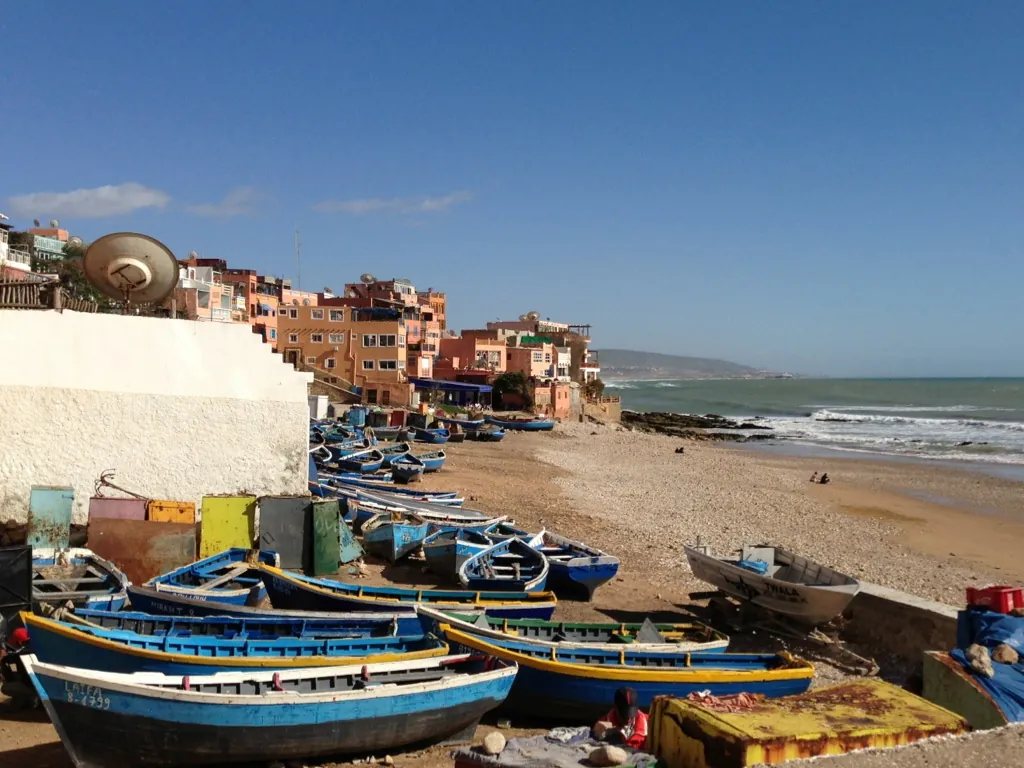
A fishing village of white and blue houses stacked on the rocks, 19 km north of Agadir, with Morocco’s most famous wave three kilometres up the road. Taghazout has been painted, surfed, photographed and developed, and it is still, at seven in the morning, a place where men pull boats up the sand.
- 19 kmnorth of Agadir
- 3 kmfrom the village to Anchor Point
- 1970sthe first surfers arrive
- 10 MADa shared taxi to Tamraght
A short history
Almost nothing is written about Taghazout before the twentieth century; the oral tradition speaks of the Amazigh tribes of the coast and their clashes with the Portuguese, who held Agadir in the early 1500s. The village lived from fishing and from argan oil, as much of it still does. In the 1970s the hippie trail arrived in vans and stayed for the winters, and with them came the first surfers from Europe, who found a coast of empty right-hand points. The camps and surf houses followed from the 1990s, the village grew up the hill, and in the 2010s the state-backed Taghazout Bay resort rose on the headland to the south, with its hotels and a golf course. The village itself has kept its scale: a mosque, a main street, lanes that drop to the beach, boats on the sand.
The beaches and the points
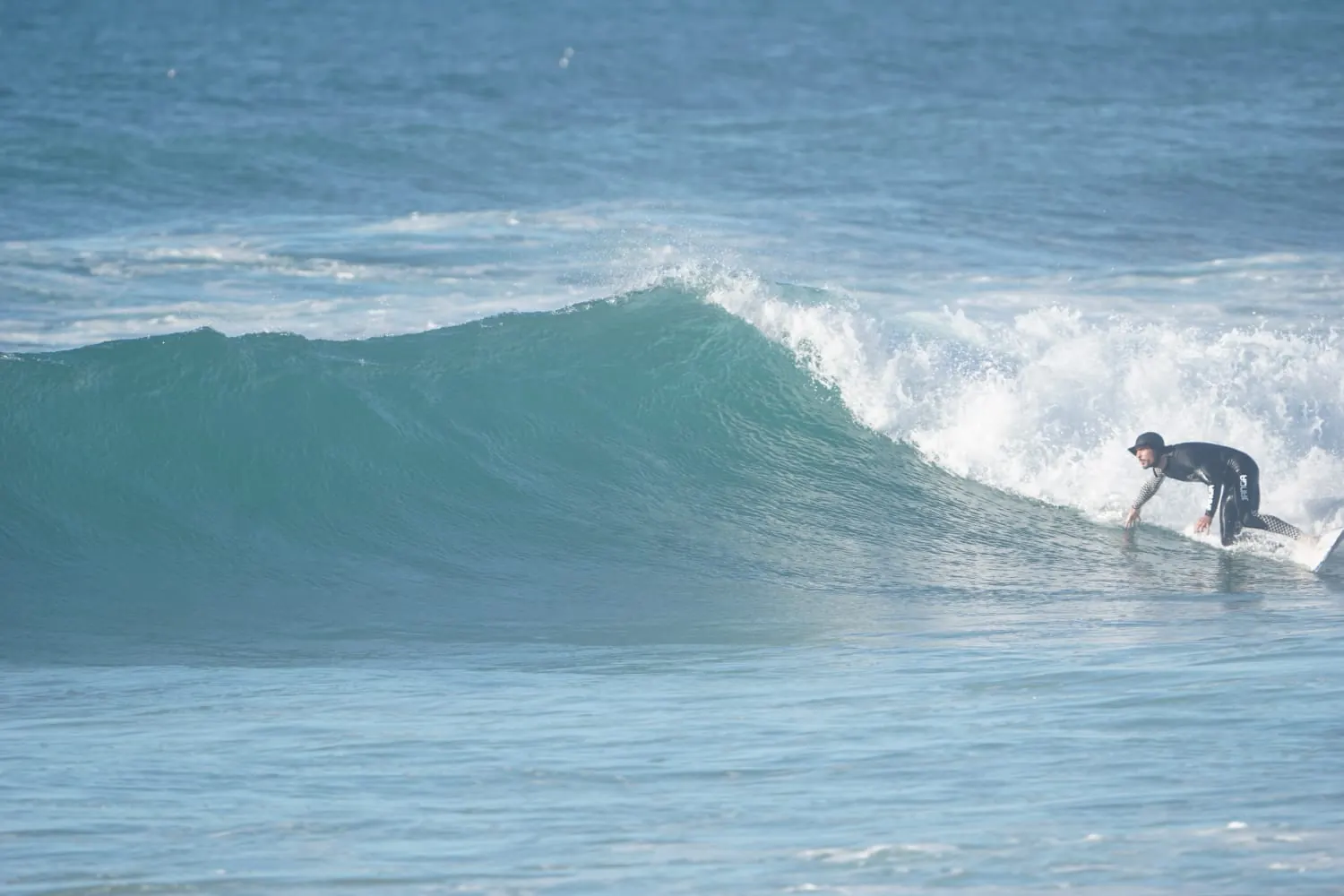
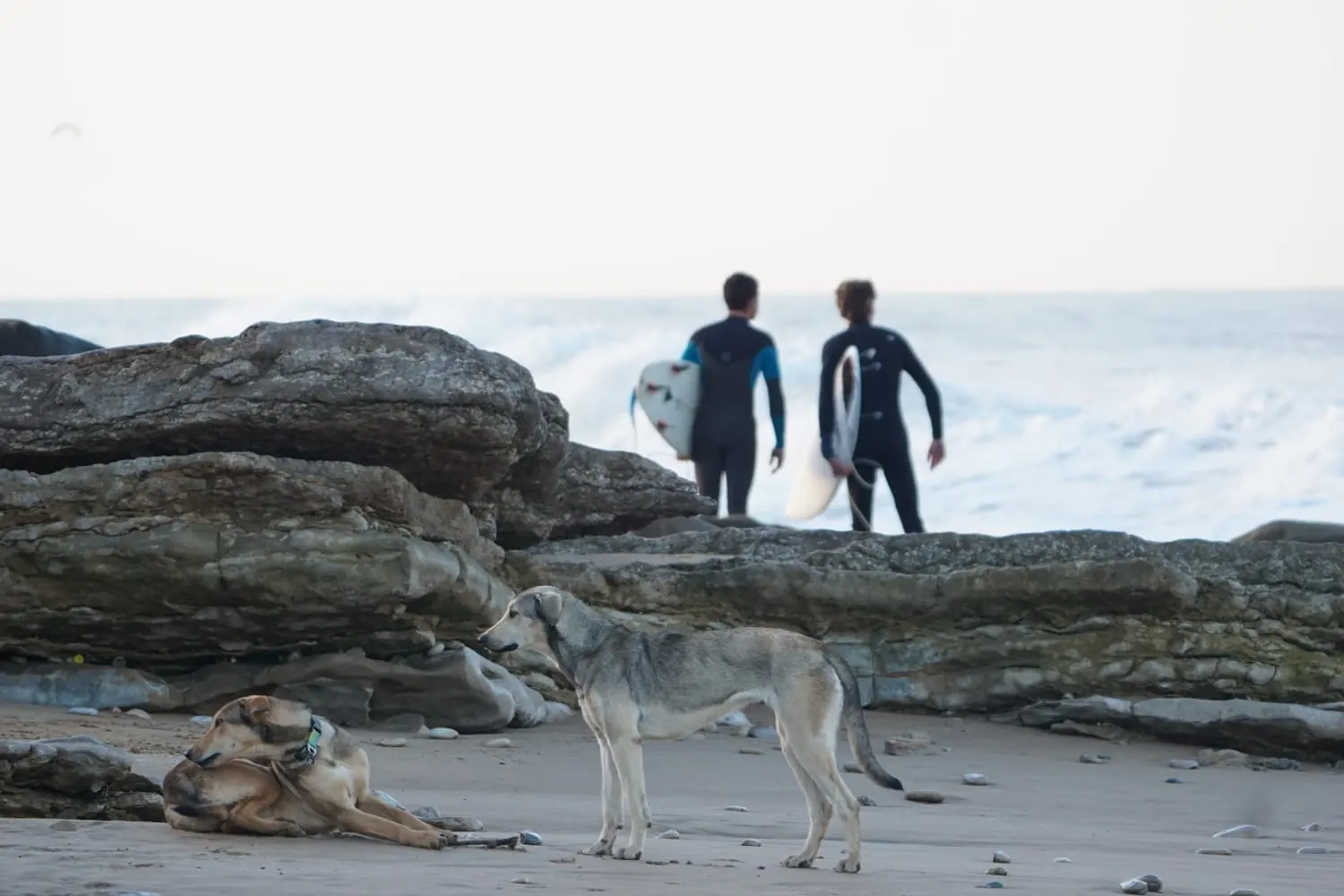
In front of the village is the village beach, with the fishing boats, the cafés and the small reef of Hash Point just offshore, the everyday wave of the local surfers. South, past the headland, Panoramas is the long beach break where the schools teach. North, a fifteen-minute walk along the shore, is Anchor Point, the long right that put Taghazout on the map, named after the anchors the fishermen once forged there. Beyond it the coast road climbs past La Source, Killer Point and Boilers to the dunes and Tamri. Our surf guide has the tides and levels for each.
It is still, at seven in the morning, a place where men pull boats up the sand.
Village life
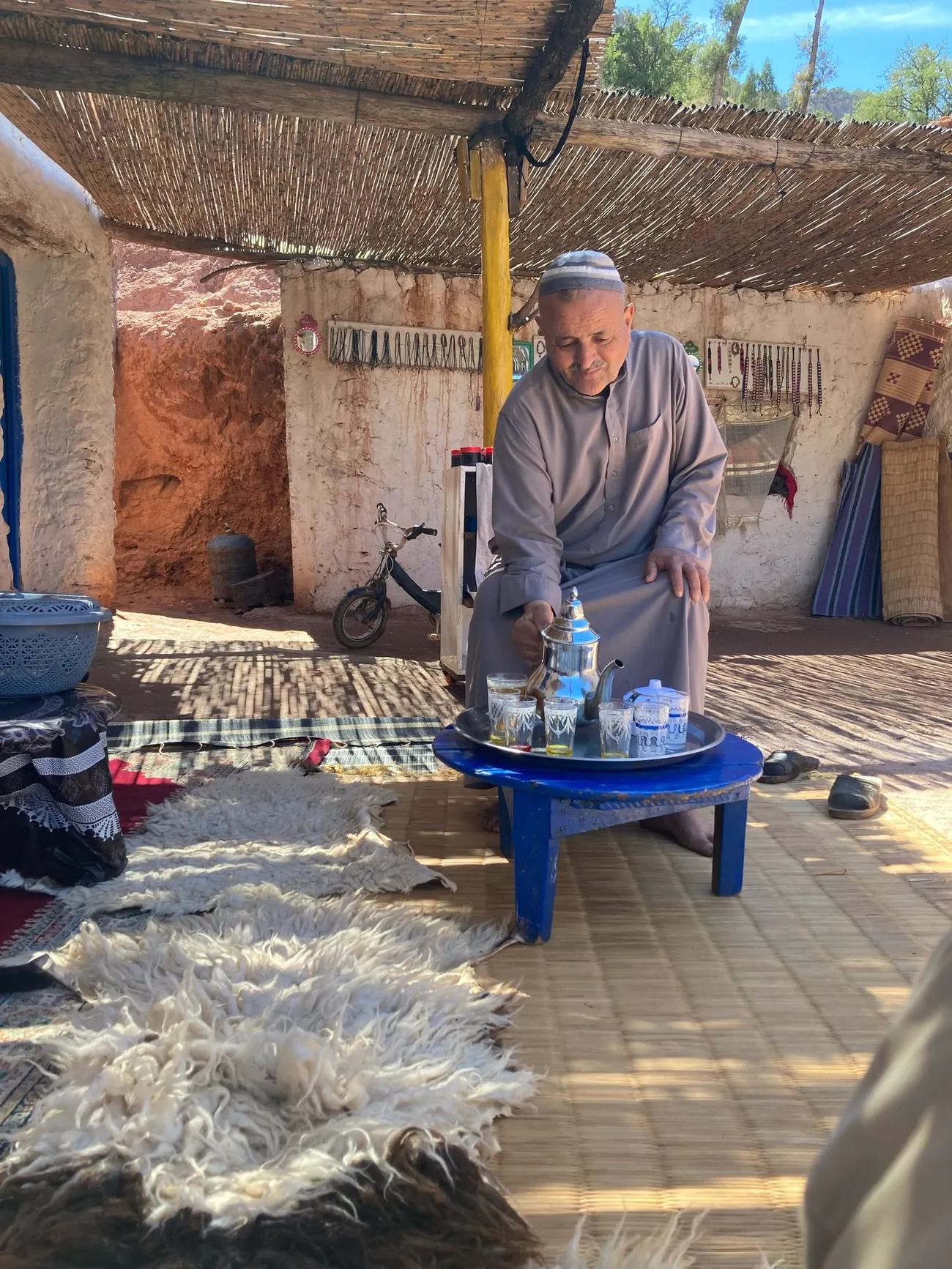
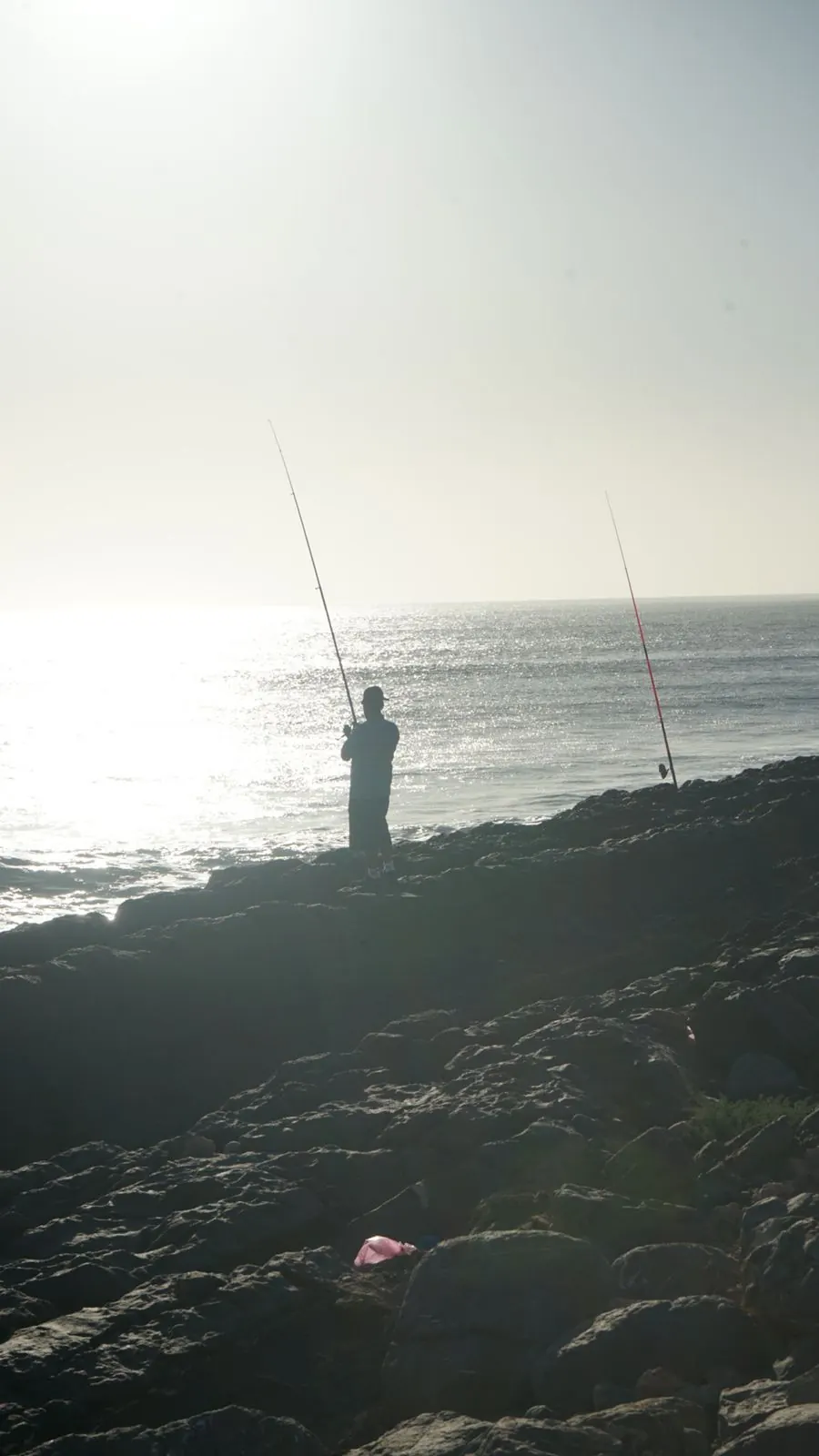
Mornings belong to the fishermen and the surfers. The boats come back around noon and sell their catch on the sand; the cafés on the beach grill it for lunch. In the afternoon the main street fills: surf shops, board repair, juice stands, argan oil, bakeries, shops of painted pottery and leather. Sunset is a ritual, watched from the rooftops or the rocks below the village. At night it is quiet, and alcohol is rare and discreet; Taghazout is a village, not a resort.
Where to eat
For a tagine, Café Taliouine on the main street is the one everyone names. Café Tayoughte, a tiny place by the beach, is where the locals eat. World of Waves does lunch and dinner over the beach; Le Spot stays open late with pizzas and calamari; Dar Josephine serves home-cooked French food in a garden full of cats, best booked; Teapot Café, run by a surf school, is where people work on laptops over smoothie bowls. Sozi Cookies and Espresso Lab for the coffee. Our eating guide has the full list for both villages.
Getting around
Everything in the village is on foot. To Tamraght, a shared taxi from the main road costs 10 MAD and takes ten minutes; to Agadir, 25 to 30 minutes by car or by bus 32 from the main road. The dunes, Paradise Valley and Imsouane need a car or a trip with us.
Our house
Moonlight sits in the old part of the village at the top of a flight of blue steps, with a rooftop that hangs over the ocean. Breakfast is laid out there every morning, Anchor Point is visible from the table, and the beach is two minutes down. Its name is Tiziri, moonlight in Tamazight, for the path the moon lays across the water on clear nights.
The practical part
Before you go
- Getting there
- 19 km north of Agadir on the N1; 45 minutes from Agadir Al Massira airport by car, transfer 300 MAD per car with Hilal. From Blue Whale in Tamraght, 10 minutes by car or shared taxi.
- When
- October to April for the waves and the village at its liveliest; May to September for warm water, small surf and quiet streets.
- Budget
- A tagine 50 to 90 MAD, a coffee 15 to 30, a shared taxi to Tamraght 10, a board for the day 50 to 100. A bed at Moonlight from 200 MAD with breakfast.