


Experience 07 · HAMMAM
The hammam: the Moroccan bath, explained
After three days of surf your shoulders will ask for it. The hammam is the oldest ritual on this coast: hot steam, black soap, a scrub that takes off a week of salt and sun, and a glass of tea afterwards. We book it, explain it, and send you with the right things in your bag.
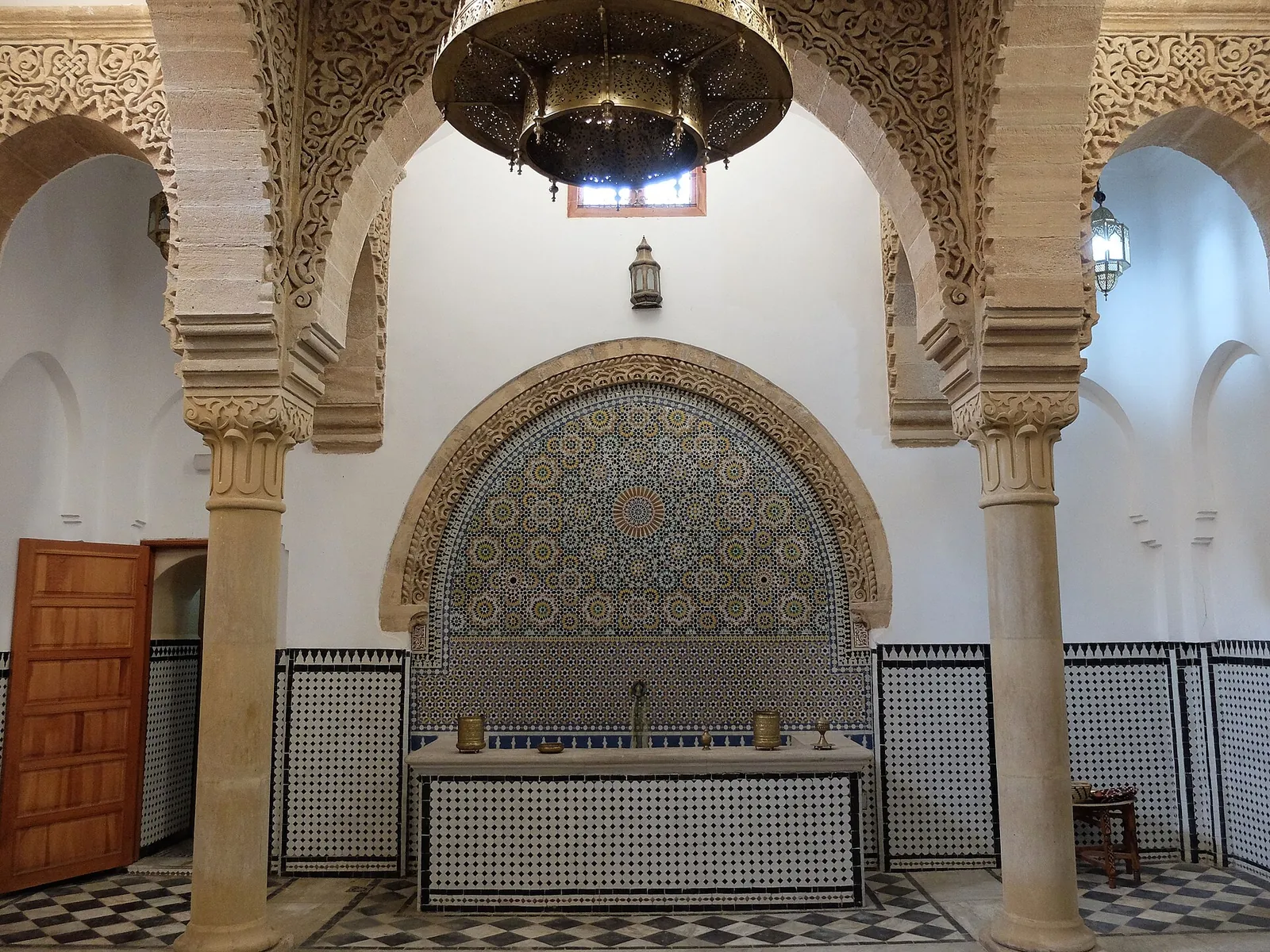
- DurationAbout 90 minutes, longer if you stay for the tea
- Price120 MAD per person, booked by our team; a scrub by a professional costs a little more on the spot
- Good forEveryone; women and men have separate rooms or separate hours
- Best momentThe afternoon of a rest day, or the day before you fly
Background
What the hammam is
The hammam descends from the Roman bath and grew up with Islam: traditionally it stands next to the mosque, because purification comes before prayer, and for centuries it was where a neighbourhood washed, met and talked, since homes had no bathrooms. Every Moroccan town still has them, and many families still go once a week. A traditional hammam is three or four vaulted rooms of tile and plaster, each hotter than the last, with taps and buckets rather than pools; men and women have separate buildings or separate hours.
What makes it Moroccan are the products. Black soap, savon beldi, is a dark paste of olive oil and olives that softens the skin. The kessa is a rough glove that, after the soap and ten minutes of steam, rolls off dead skin in a way that is slightly alarming the first time and addictive afterwards. Ghassoul is a clay from the Atlas, mixed with water or rose water into a mask for skin and hair. Argan oil goes on at the end. None of it is a spa invention; it is what your neighbour’s grandmother uses.
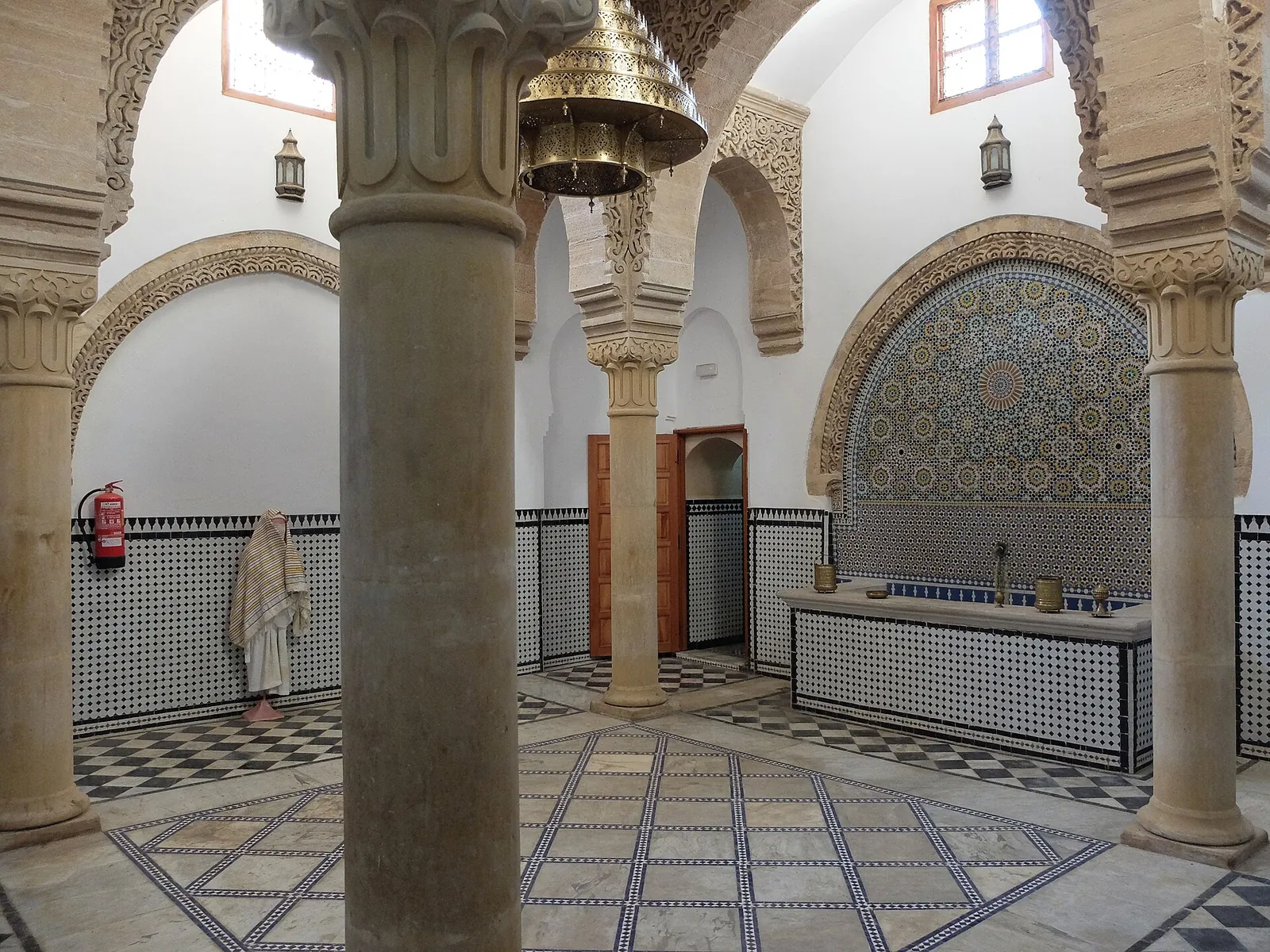
On the ground
The ritual, step by step
- Undress in the changing room. Men keep swim shorts or boxers; women underwear or a bikini bottom. Leave phone, jewellery and money at the house. Take sandals, a towel, a bucket (the attendant lends one), your soap and glove.
- Heat. Sit ten minutes in the hottest room to open the pores, then settle in a room you find comfortable and fill your bucket, mixing hot and cold.
- Black soap. Coat yourself from neck to feet, wait five minutes, rinse.
- The scrub. With the kessa, in firm circles, everywhere you can reach. Ask a neighbour for your back, or hire a kessala, the professional scrubber, which we recommend for a first time: she or he does the whole body in ten minutes and you will feel new. Rinse.
- Ghassoul. Mix the clay to a paste and spread it on your skin and hair. Rest a few minutes, rinse, then your usual shampoo.
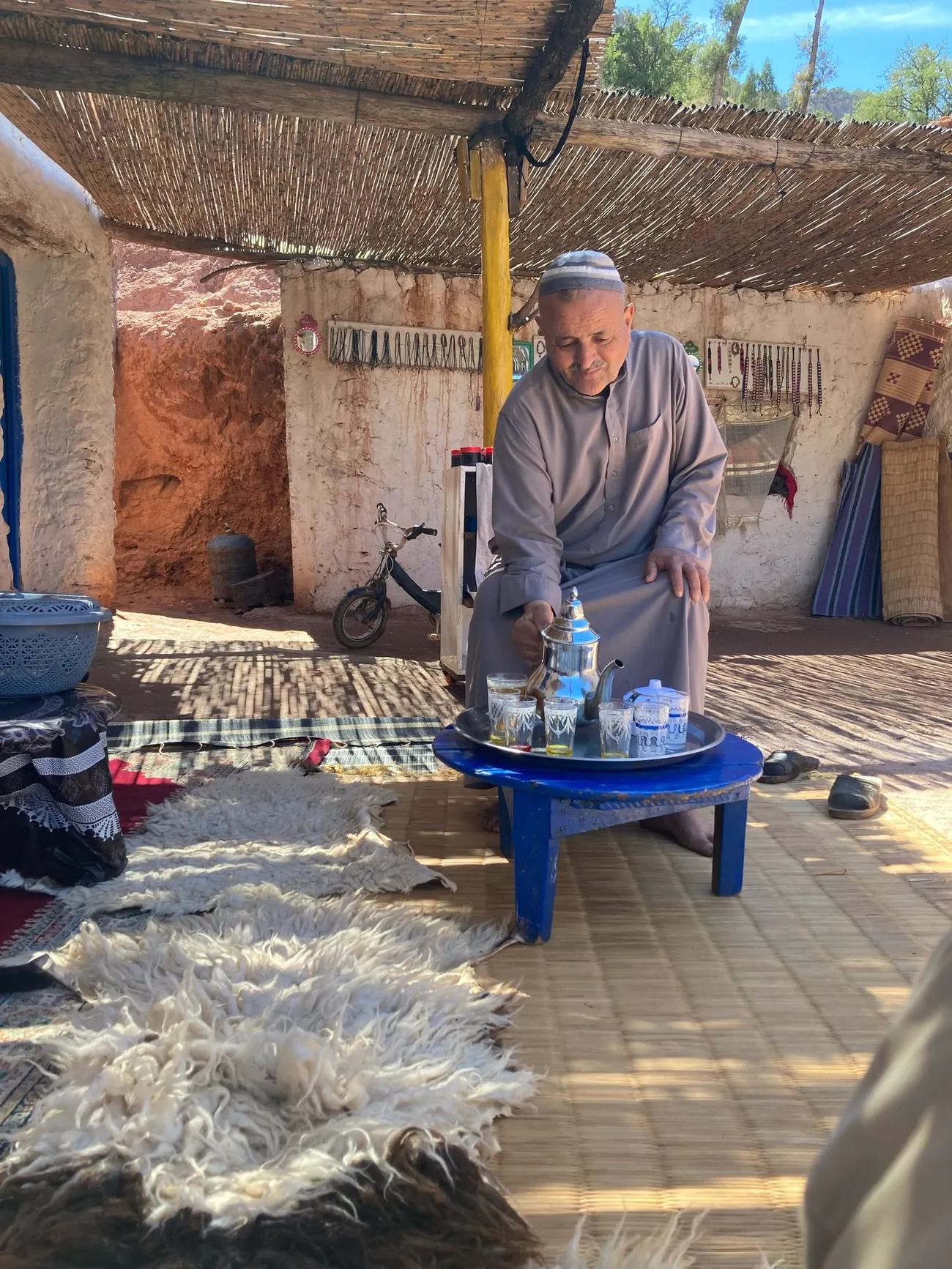
- Cool down in the first room, drink the water you brought, dress slowly. Argan oil on damp skin. Tea.
Manners
Speak quietly, do not splash your neighbours, rinse the spot where you sat before you leave, tip the attendant and the kessala (20 to 50 MAD). A local hammam costs 10 to 20 MAD to enter; a professional hammam with an attendant more, which is what we book for you, so that someone explains everything as it happens.
With us
How it works with Hilal
Switch on the hammam in the builder at 120 MAD per person and we book a time at a hammam in the village or in Aourir, with the soap and the glove in a bag for you. Tell us if you want the kessala; it is paid on the spot. To go further, add the argan massage in the builder: an hour with argan oil at a spa in the village, 350 MAD in Tamraght, 450 MAD in Taghazout. The hammam is included in our Yoga Flow, Work & Waves, Coast Drive and Dunes & Valleys plans (Yoga Flow adds the argan massage), and it goes very well with an evening yoga session the day before you leave.
Questions
Your questions
Is the hammam mixed?
No. Traditional hammams have separate buildings or separate hours for women and men. Couples go at the same time to different rooms and meet for tea afterwards.
What do I wear?
Swim shorts or boxers for men, underwear or a bikini bottom for women. Sandals for the wet floor. Nothing valuable.
How much does it cost?
120 MAD per person through Hilal, including the booking, the black soap and the kessa glove. A professional scrub is 100 to 150 MAD more, paid on the spot.
Further reading
To read before you come
 Guide · YogaYoga on the rooftops of Tamraght and TaghazoutOne-hour yoga sessions on the terraces of Hilal’s two houses, at sunrise or sunset. 120 MAD a session in Tamraght, 150 MAD in Taghazout, mats provided.Journal · FoodWhere to eat in Tamraght and Taghazout: the authentic tables, and the ones nobody tells you aboutThe cafés, grills and kitchens of Tamraght and Taghazout as locals use them: tagines at Café Taliouine, 10-dirham sandwiches at Kamal, tea at Zawya.
 Journal · VillagesTamraght: the quiet village between two beachesTamraght, the quiet village between Aourir and Taghazout: Devil’s Rock and Crocro, the Banana Village next door, cafés, the skatepark, buses, prices.
Photo credits: R Prazeres, CC BY-SA 4.0 (Wikimedia Commons). The other photographs are ours, taken from the two houses and on the road.
YOUR STAY
Make it part of your stay.
Add it to your plan in the builder, priced line by line. Our team confirms everything before you pay.