


Experience 01 · SURF
Surfing in Taghazout and Tamraght
Two villages, a dozen waves within fifteen minutes of each other, and a season that runs from the first autumn swell to late spring. This is the coast where Morocco learned to surf, and it is a very good place to learn too.
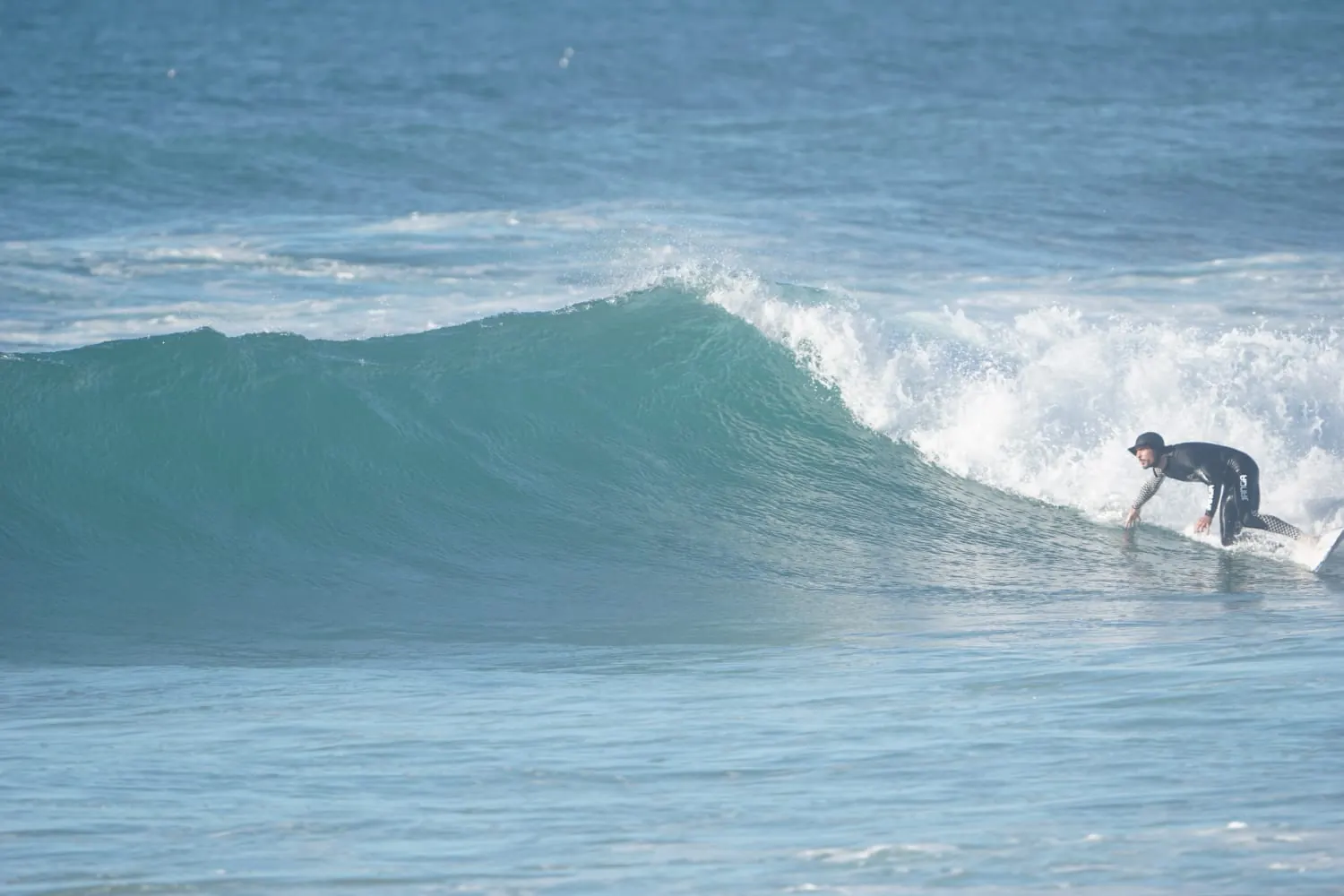
- DurationA full day: the 2-hour lesson, lunch on the beach, free surf in the afternoon
- Price500 MAD a surf school day in Tamraght, 560 MAD in Taghazouta private lesson 600 MAD in Tamraght, 700 MAD in Taghazoutboard & wetsuit outside the school 140 MAD a day in Tamraght, 180 MAD in Taghazout
- LevelComplete beginners to intermediates working on their turns
- Best seasonOctober to April for the points; small, warm waves all summer for learning
Background
Why Taghazout and Tamraght
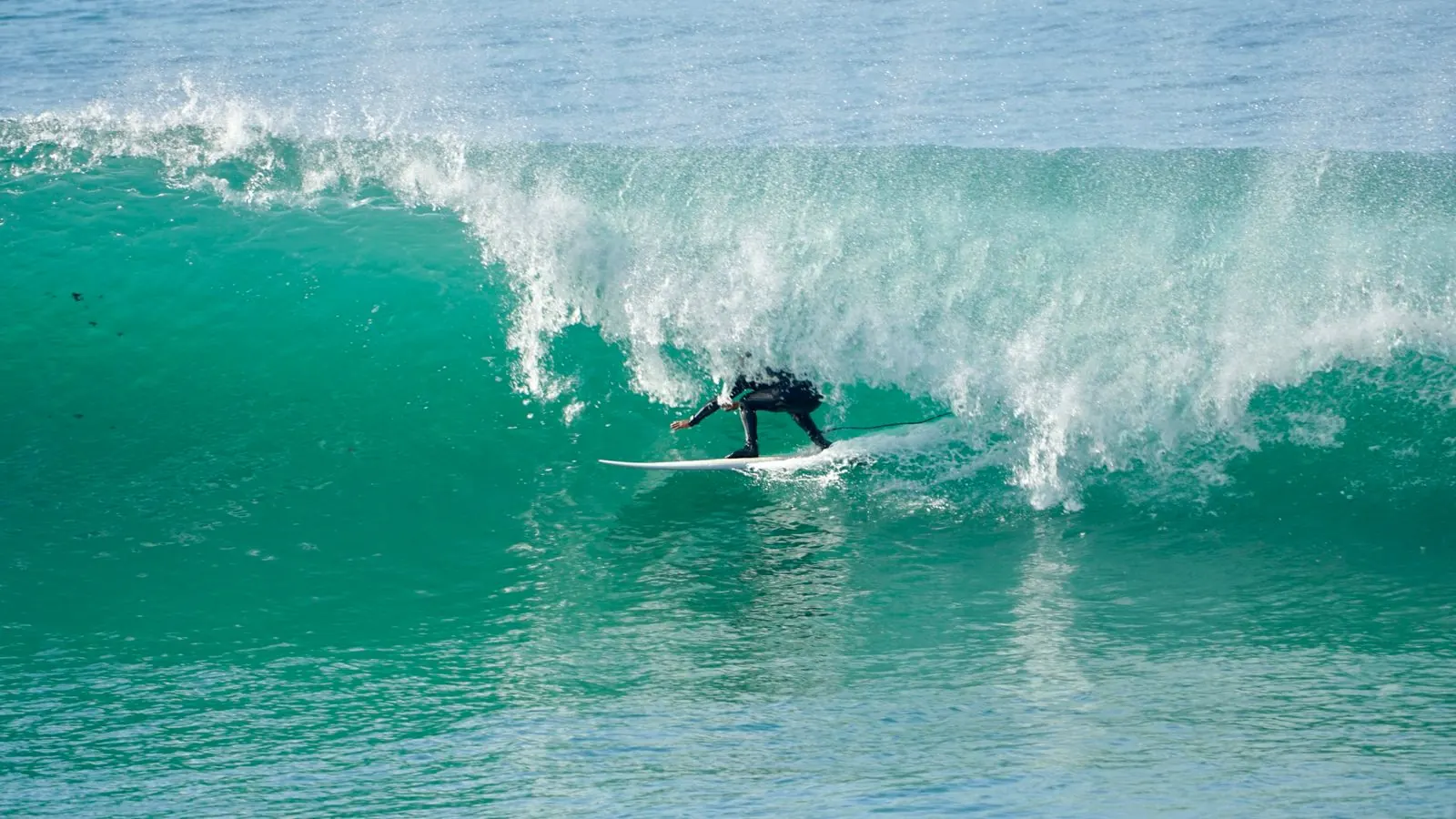
Taghazout sits 19 km north of Agadir, and the coast around it bends to face the north-west. That bend is the whole story: when the Atlantic sends winter swell down from Iceland and the Azores, a chain of right-hand point breaks lights up one after the other, from Boilers in the north to Anchor Point just above the village. Three kilometres south, Tamraght looks onto gentler sand: Devil’s Rock, Crocro Beach and Banana Point, where most people stand up for the first time.
The result is rare. A complete beginner and a surfer chasing a long right can stay in the same house, leave at the same time and both have the best session of their year. The water is Atlantic but not cold (a 3/2 wetsuit in winter, a spring suit or none in summer), the sun is reliable, and the season is long: the first proper swells arrive in October, the biggest run from December to February, and by April the points soften into friendly shoulders.
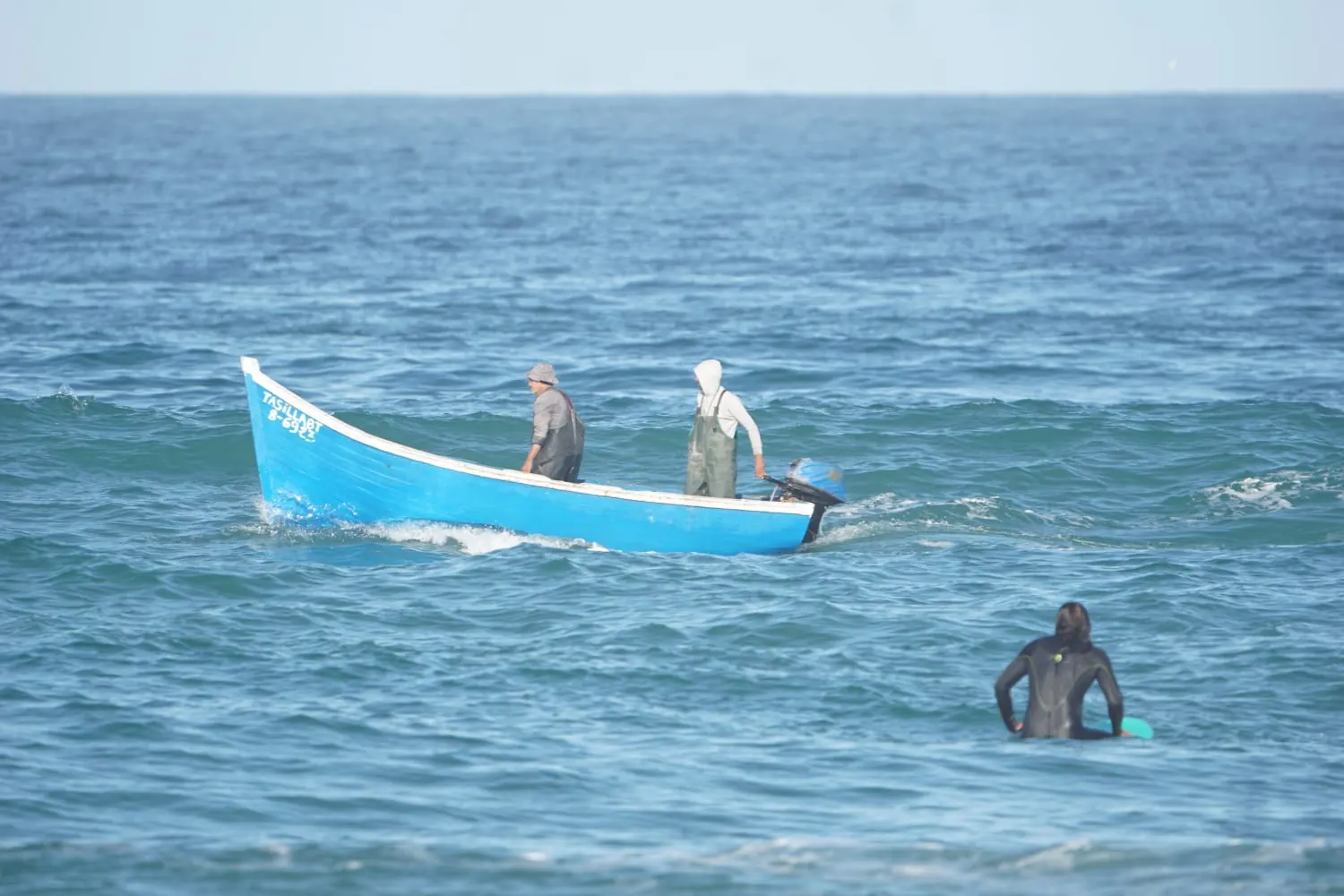
The villages grew up around surfing. Fishing came first, then the hippie vans of the 1970s, then the surf houses, and today a dozen schools, board shapers and photographers live within a few streets. You will not struggle to find a wetsuit in your size, a wax bar, a fish tagine at the end of the day, or someone to tell you where it worked this morning.
On the ground
The spot guide, south to north
Distances are from the two houses. Tides change everything here: a spot that is perfect at mid tide can close out or drain two hours later, so always check a tide table (we keep one in the kitchen) and ask before you paddle out somewhere new. The northern points are for experienced surfers only, with urchins on the rocks and strong currents; go with a coach the first time.
| Spot | Wave | Level | Tide & swell | From the houses |
|---|---|---|---|---|
| Banana Point, Aourir | A mellow right over sand and a bit of rock, at the mouth of the river | Beginner to intermediate | Best around high tide; works on small to medium swell. Locals say April to September are its best months | Moonlight 10 min by car Blue Whale 5 min |
| Crocro Beach, Tamraght | A long sandy beach break with room for everyone | Beginner | Mid tide, small to medium swell | Moonlight 8 min by car Blue Whale 8 min on foot |
| Devil’s Rock, Tamraght | Lefts mostly, some rights, around a dark rock in the sand; a café on the beach | Beginner to intermediate | Mid tide, north-west swell, north-east wind offshore | Moonlight 7 min by car Blue Whale 10 min on foot |
| Panoramas, Taghazout | A beach break with a long, soft shoulder | Beginner, longboarders | Mid tide, small to medium swell | Moonlight 5 min on foot Blue Whale 10 min by car |
| Hash Point, Taghazout | The reef in front of the village: easy to reach, consistent | Intermediate | Small to medium swell, most tides | Moonlight 5 min on foot Blue Whale 10 min by car |
| Anchor Point, Taghazout | Morocco’s most famous wave: a long, walling right off a rock headland, 3 km north of the village | Intermediate to advanced | Mid to low tide; needs a solid north-west swell, around 1.8 m and more | Moonlight 15 min on foot along the shore Blue Whale 12 min by car |
| La Source | A reef peak north of Anchor Point, fun in smaller swell | Intermediate | Mid tide, small to medium swell | 15 min by car from both houses |
| Killer Point | A long, powerful right named after the orcas once seen offshore | Advanced | Works at all tides on a north-west swell with easterly wind; often best on the dropping tide | 15 min by car |
| Boilers | A heavy, hollow reef break named after the ship’s boiler on the rocks | Expert | Mid tide, medium to big swell | 20 min by car |
| Imsouane, The Bay | One of the longest rights in Africa: several hundred metres on a good day, in a fishing village an hour north | Beginner on the inside, everyone on the outside | Mid to high tide, medium swell | About 1 h by car; read our Imsouane day trip |
Reading the season
- October to November: the first groundswells, warm water, quiet line-ups. The sweet spot for intermediates.
- December to February: the biggest and most consistent swells; the points at their best, the beaches often too big for beginners in the morning and perfect in the afternoon.
- March to April: still consistent, softer, longer days.
- May to September: small, clean, warm. The best months to learn and the quietest for the villages.
Two useful tools
Swell and wind: surf-forecast.com for Anchor Point. Tides: tide-forecast.com for Agadir. Your coach reads both before deciding where to take you.
With us
How it works with Hilal
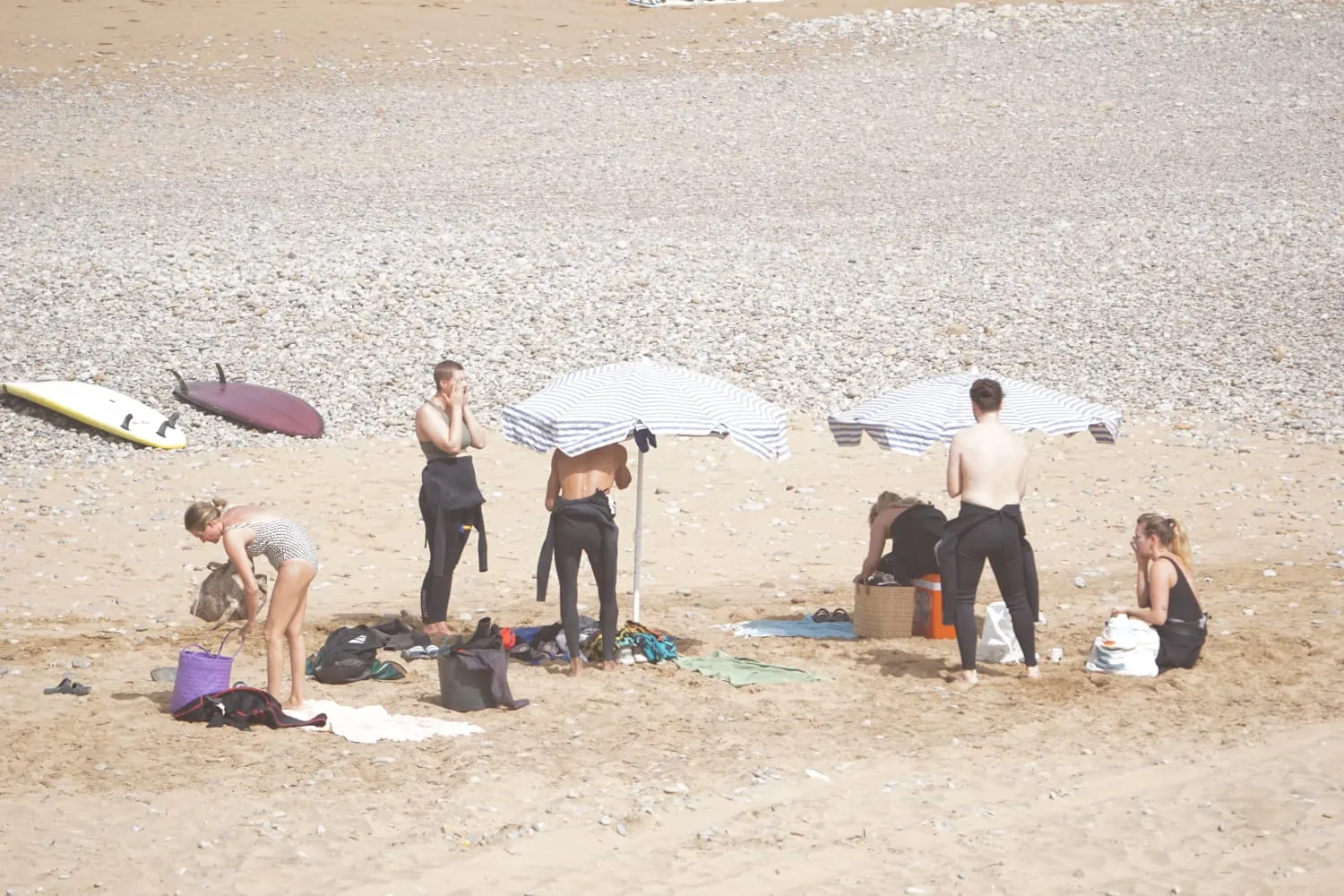
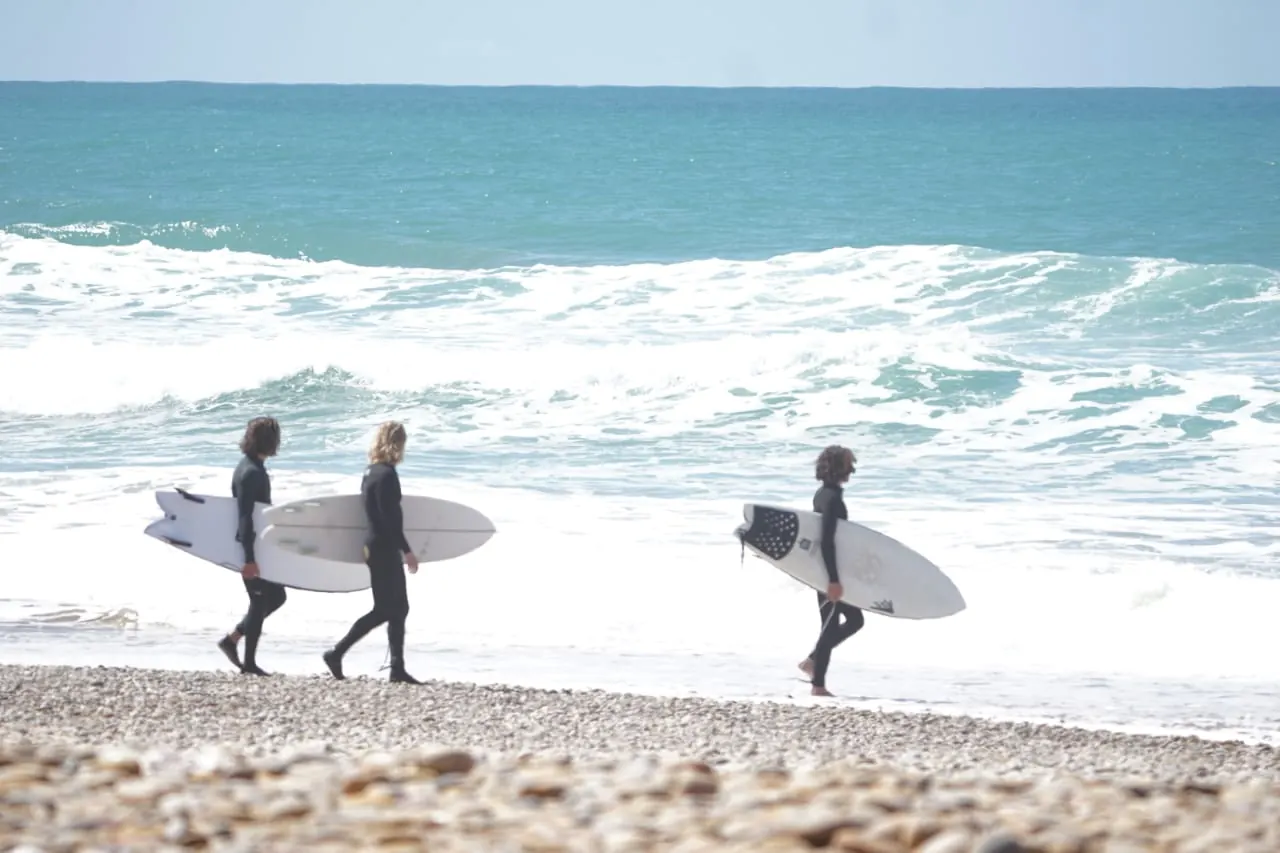
A surf school day starts with two hours in the water with a coach, board and wetsuit included, at whichever beach fits the tide and your level that day; then lunch on the beach, and an afternoon of free surf with the coach watching from the sand. The groups are small (four to six people of a similar level); a private lesson is two hours with just you and the coach. Beginners start on the sand with the pop-up, then in the white water, and most people stand up on the first morning. Intermediates work on paddling into green waves, the take-off angle, then the first turns, with the coach in the water beside them.
Count your days in the builder, as many as you like: a surf school day is 500 MAD in Tamraght and 560 MAD in Taghazout, and a private lesson, two hours one to one, costs more than the school day: 600 MAD in Tamraght, 700 MAD in Taghazout. If you surf on your own outside the school, a board and a wetsuit cost 140 MAD a day in Tamraght and 180 MAD in Taghazout. Our Surf Focus plan puts five surf school days in a week with the room and the meals, and adds yoga at sunset, a board for the days without school and tea on the terrace every afternoon; Work & Waves, for people who work remotely, fits two private lessons around the work days of a seven-day stay.
Bring sun cream (zinc for your face), a rash vest if you have one, and flip-flops for the rocks. Everything else is here.
Where you stay
From our houses
Moonlight, Taghazout looks straight at the water. Panoramas and Hash Point are five minutes down the steps; Anchor Point is about twenty minutes on foot north along the shore, which means you can watch it from the breakfast table and decide.
Blue Whale, Tamraght is the beginner’s house: Crocro Beach is about fifteen minutes downhill on foot and Devil’s Rock about twenty-five, so you can check the waves from the roof with your coffee and be in the water before the wind turns. Boards lean against the blue wall between sessions, and the shower is hot when you come back up. The Moonlight and Blue Whale pages have the rooms and the prices.
Questions
Your questions
I have never surfed. Is Taghazout a good place to start?
Yes. The beaches of Tamraght and Aourir (Crocro, Devil’s Rock, Banana Point) are sandy, gently sloping and work on small swell, and the summer months are small and warm. Most beginners stand up during the first morning of surf school.
What is included in a surf school day?
The drive to the beach that fits the tide and your level, two hours in the water with a coach, the board and the wetsuit, lunch on the beach, then free surf in the afternoon with the coach watching. 500 MAD a day in Tamraght, 560 MAD in Taghazout. A private lesson, two hours one to one with the board and the wetsuit, costs more than the school day: 600 MAD in Tamraght, 700 MAD in Taghazout.
When is the surf season?
The point breaks work from October to April, with the biggest swells from December to February. Beginners can learn all year; summer brings small, clean, warm waves.
Do I need a wetsuit?
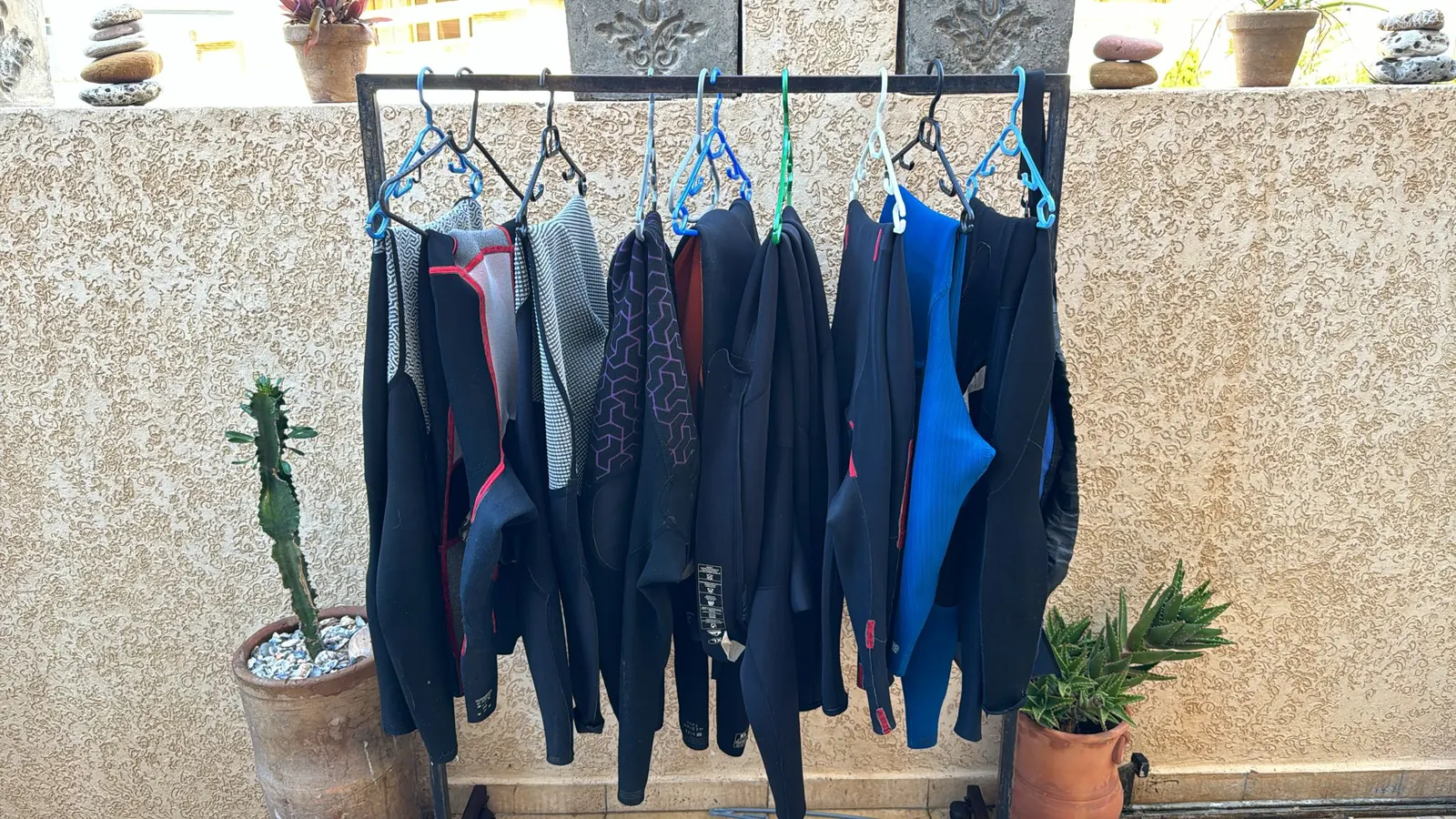
In winter the water is around 17 to 18°C: a 3/2 suit, which we provide. From June to September a spring suit or a rash vest is enough.
Can I rent a board without the surf school?
Yes: in the builder, a board and a wetsuit are 140 MAD a day in Tamraght and 180 MAD in Taghazout, and the coach will still tell you where to go for your level.
Further reading
To read before you come
- The Stormrider Surf Guide: Europethe Morocco chapter covers the whole coast from Tangier to DakhlaLow Pressure · publisher
- The World Stormrider Surf Guideone volume, 260 mapsLow Pressure · publisher
- Lonely Planet Morocco15th edition, November 2025Lonely Planet · publisher
- The Rough Guide to Morocco14th edition, 2025Rough Guides · publisher
- Guide du Routard Maroc 2025/26in FrenchHachette · publisher
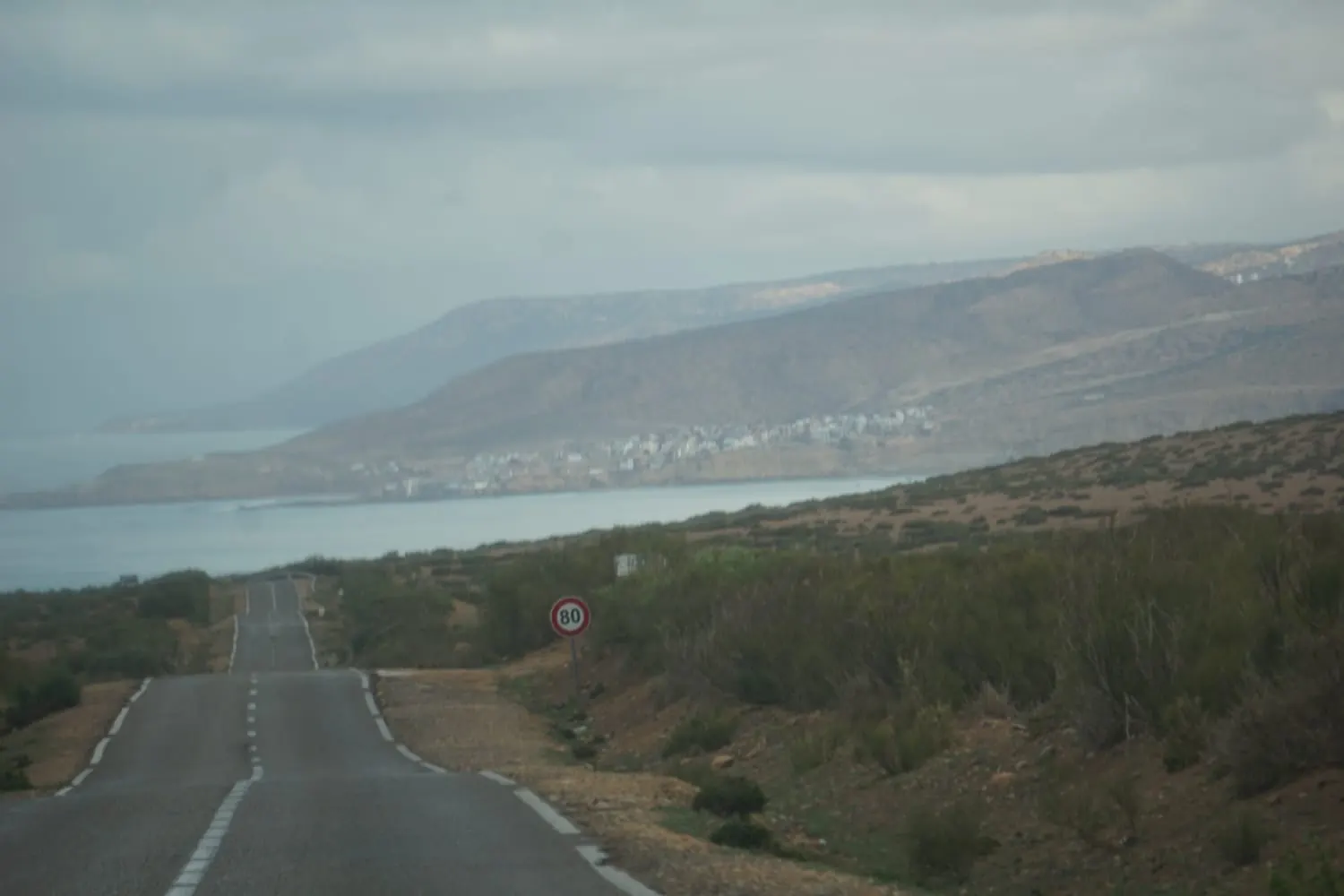 Journal · Day tripsImsouane: the longest wave on the coast, one hour northA day trip to Imsouane from Taghazout: the Bay, one of the longest rights in Africa, Cathedral Point, the harbour, when to go, and lunch on the beach.
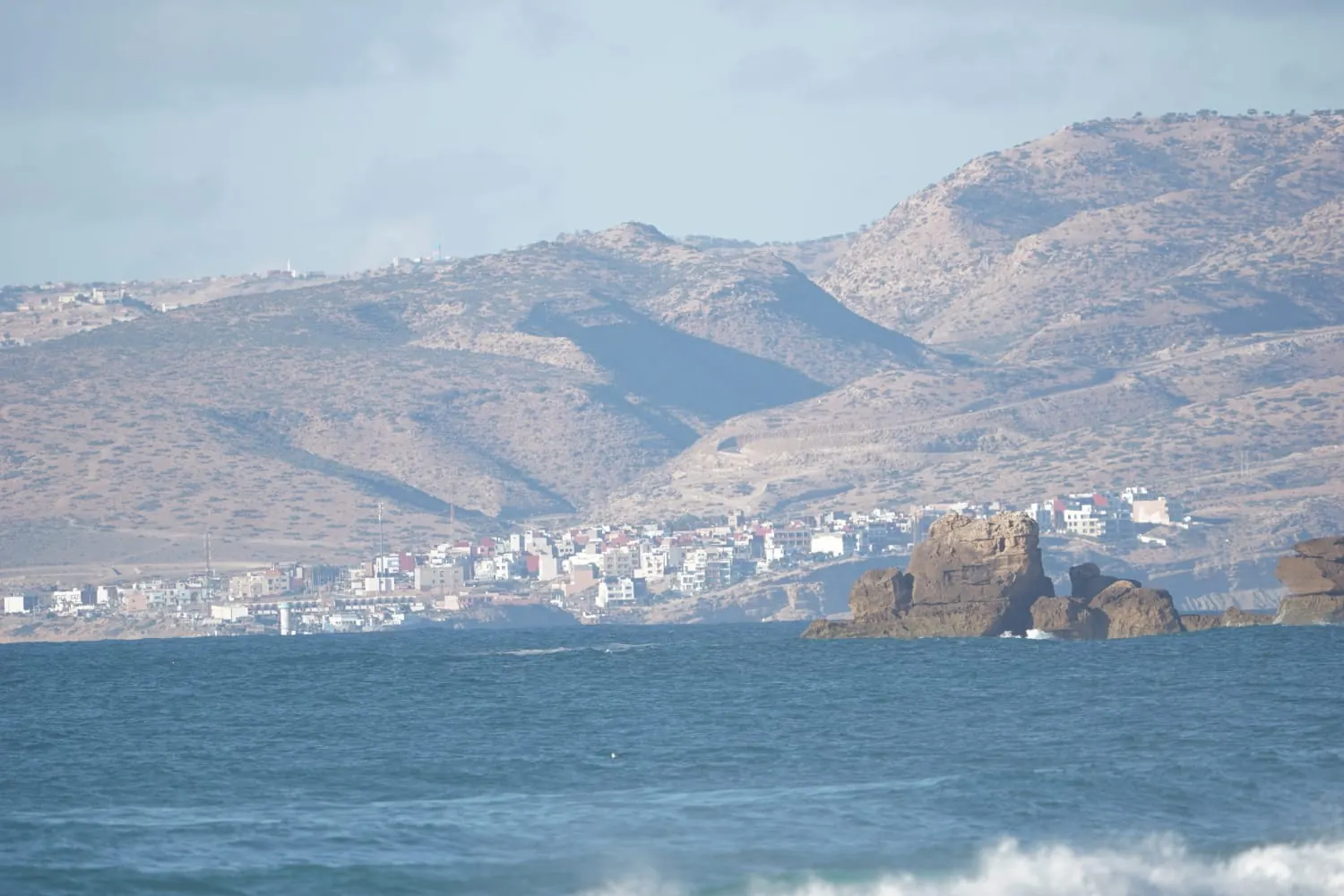 Journal · VillagesTaghazout: the village behind the waveTaghazout from the inside: the fishing village north of Agadir that became Morocco’s surf capital, its beaches and points, where to eat, how to get around.
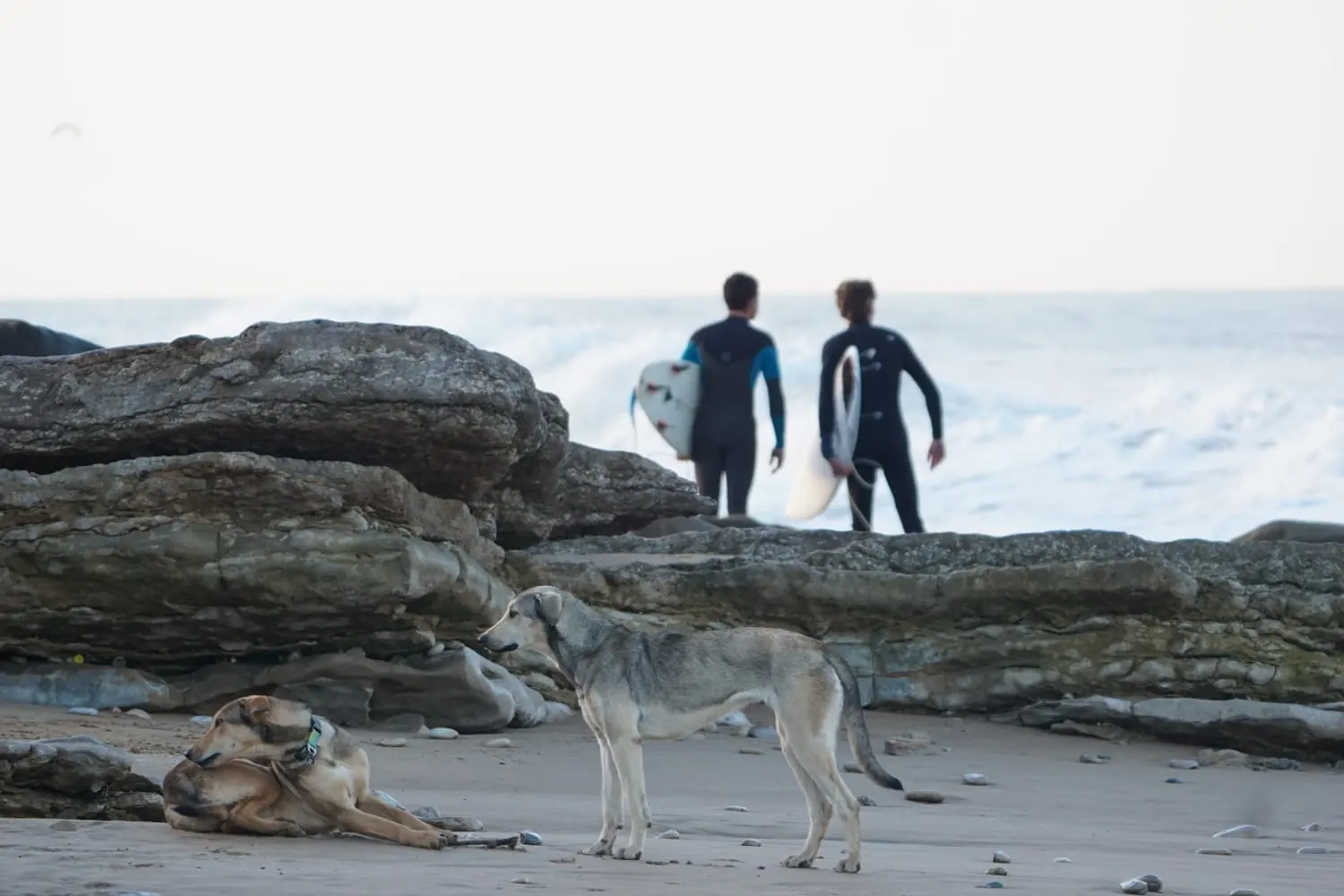 Journal · VillagesTamraght: the quiet village between two beachesTamraght, the quiet village between Aourir and Taghazout: Devil’s Rock and Crocro, the Banana Village next door, cafés, the skatepark, buses, prices.
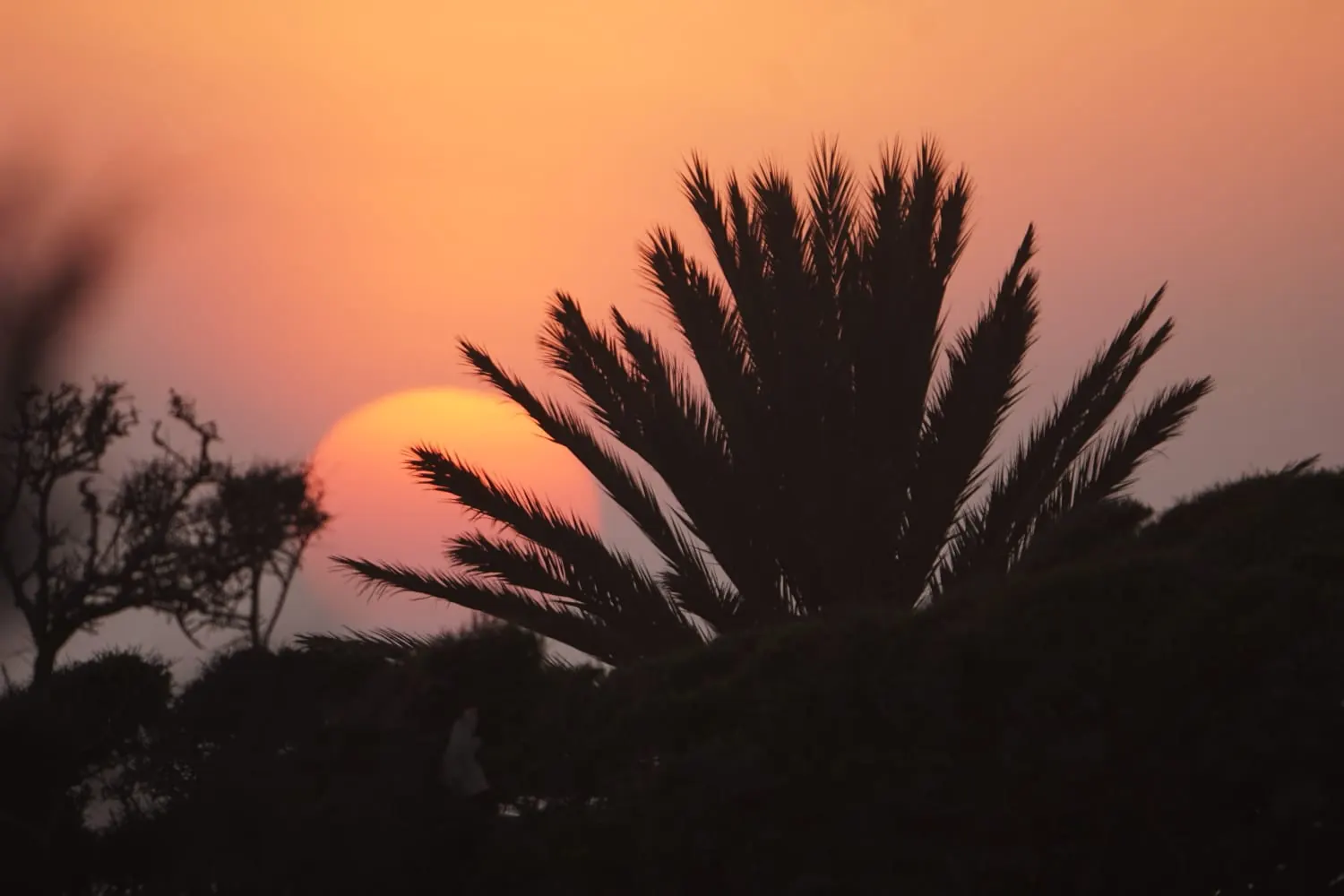 Guide · YogaYoga on the rooftops of Tamraght and TaghazoutOne-hour yoga sessions on the terraces of Hilal’s two houses, at sunrise or sunset. 120 MAD a session in Tamraght, 150 MAD in Taghazout, mats provided.
The photographs are ours, taken from the two houses and on the road.
YOUR STAY
Make it part of your stay.
Add it to your plan in the builder, priced line by line. Our team confirms everything before you pay.