

Inezgane and Dcheira: the Tuesday souk and the towns where Agadir really shops
If Souk El Had is where Agadir shops, Inezgane is where Souk El Had shops. The towns south of the Souss river are the engine of the region: the wholesale market, the bus station, the silversmiths and a Tuesday souk that long ago stopped waiting for Tuesday.
- 8 kmfrom Agadir to Inezgane
- Tuesdaythe souk’s big day
- 113,041people in Dcheira (2024)
- 3 roadsN1, N8 and N10 meet here
Where they are
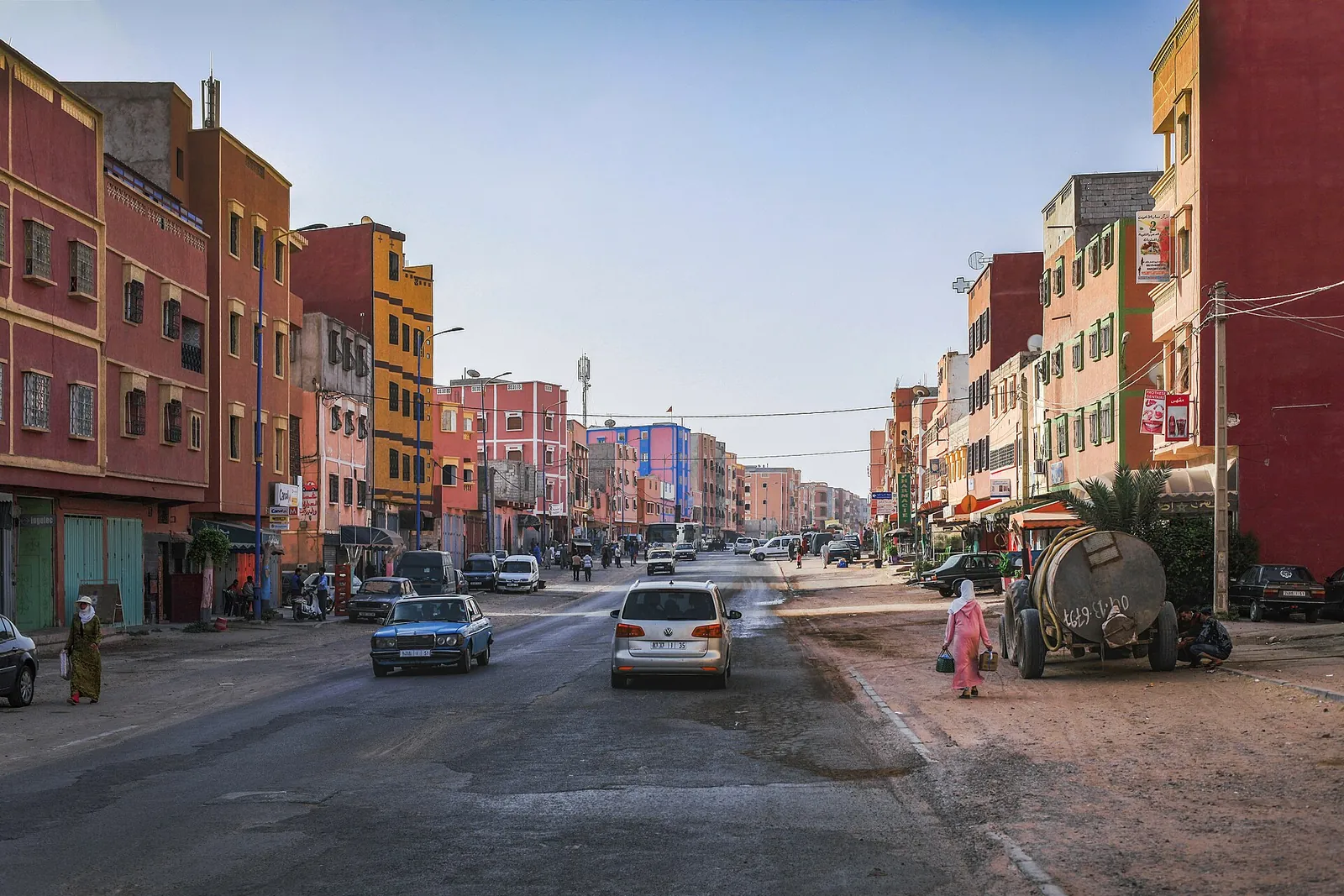
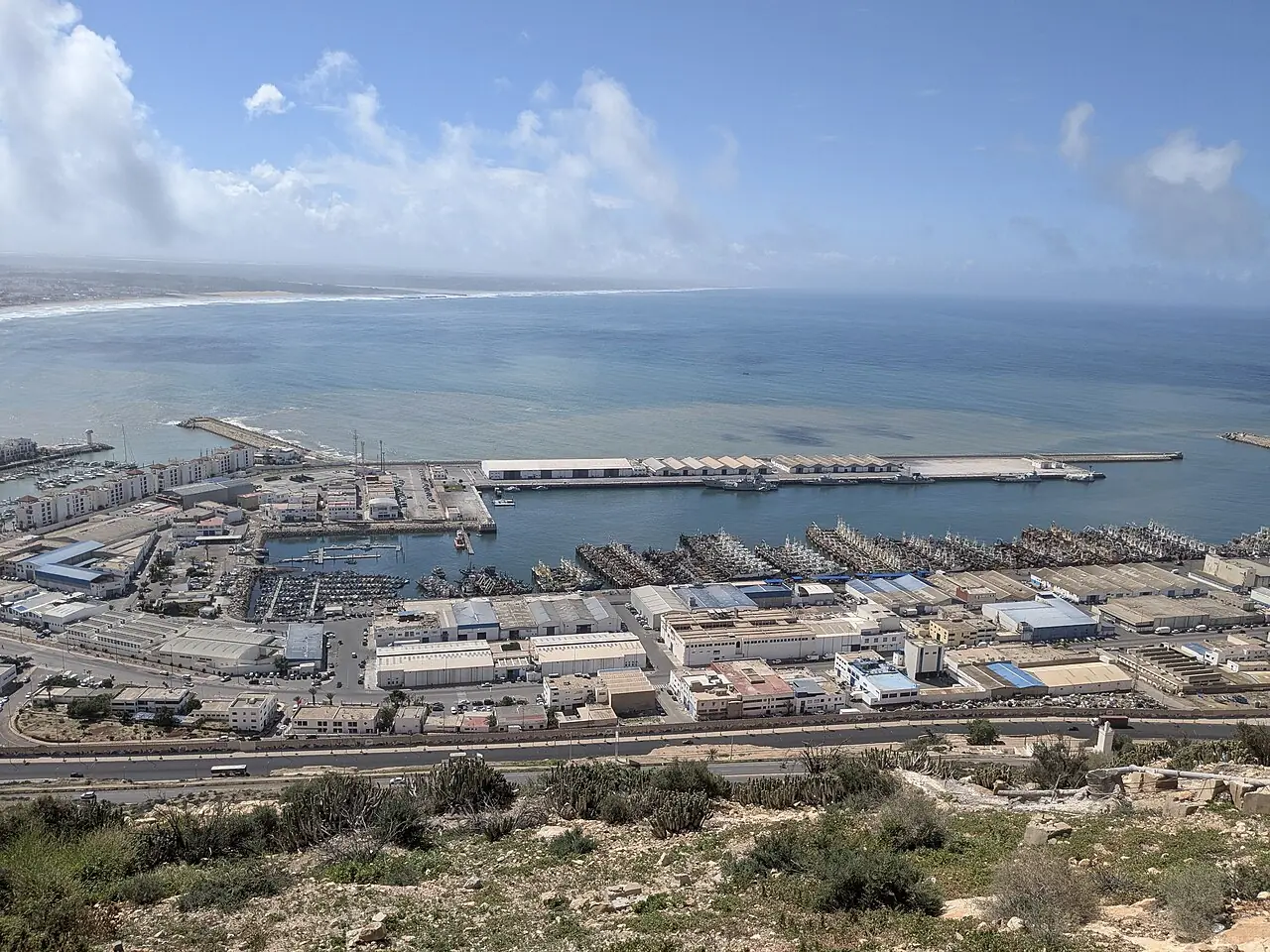
Cross the Souss river south of Agadir and the city does not stop; it changes name. Inezgane, eight kilometres from the centre, is the capital of the Inezgane-Aït Melloul prefecture and the crossroads of the south, where the N1 to the Sahara, the N8 to Marrakech and the N10 to Taroudant meet. Dcheira El Jihadia, its neighbour, is a town of 113,000 people (2024 census) that grew out of a village in two generations, ten kilometres south of Agadir. Neither has a monument. Both have markets that make the souks of the coast look small.
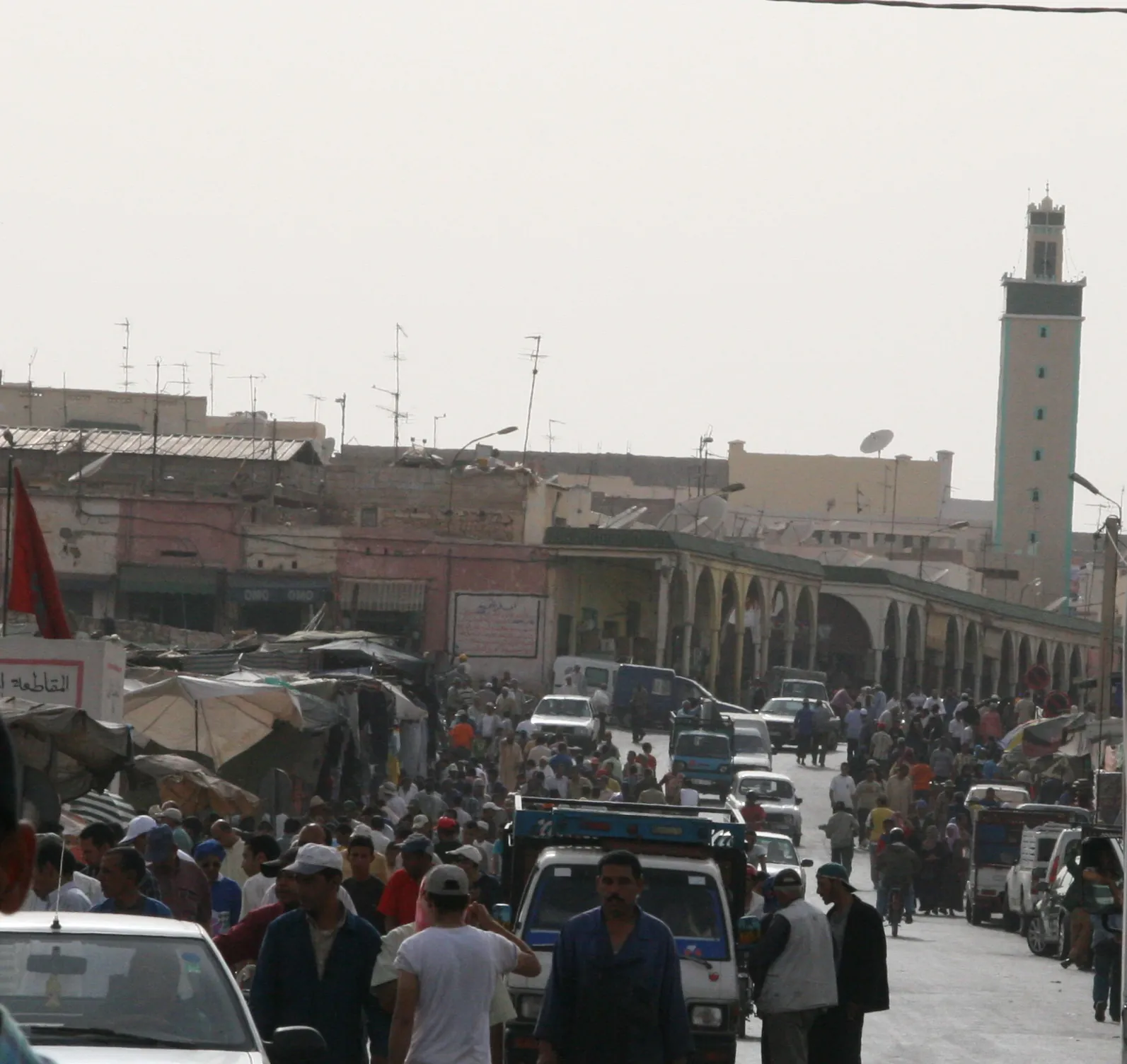
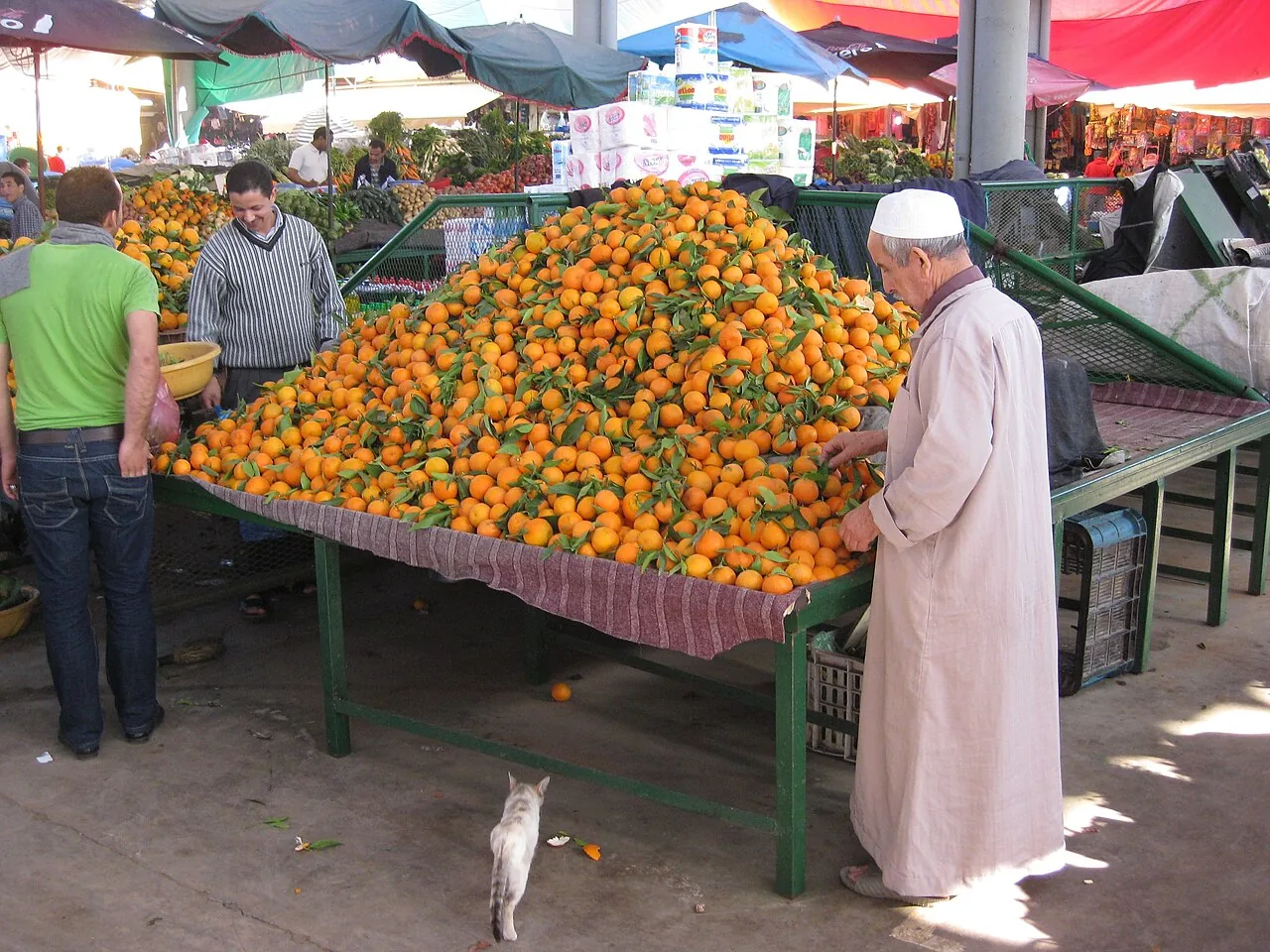
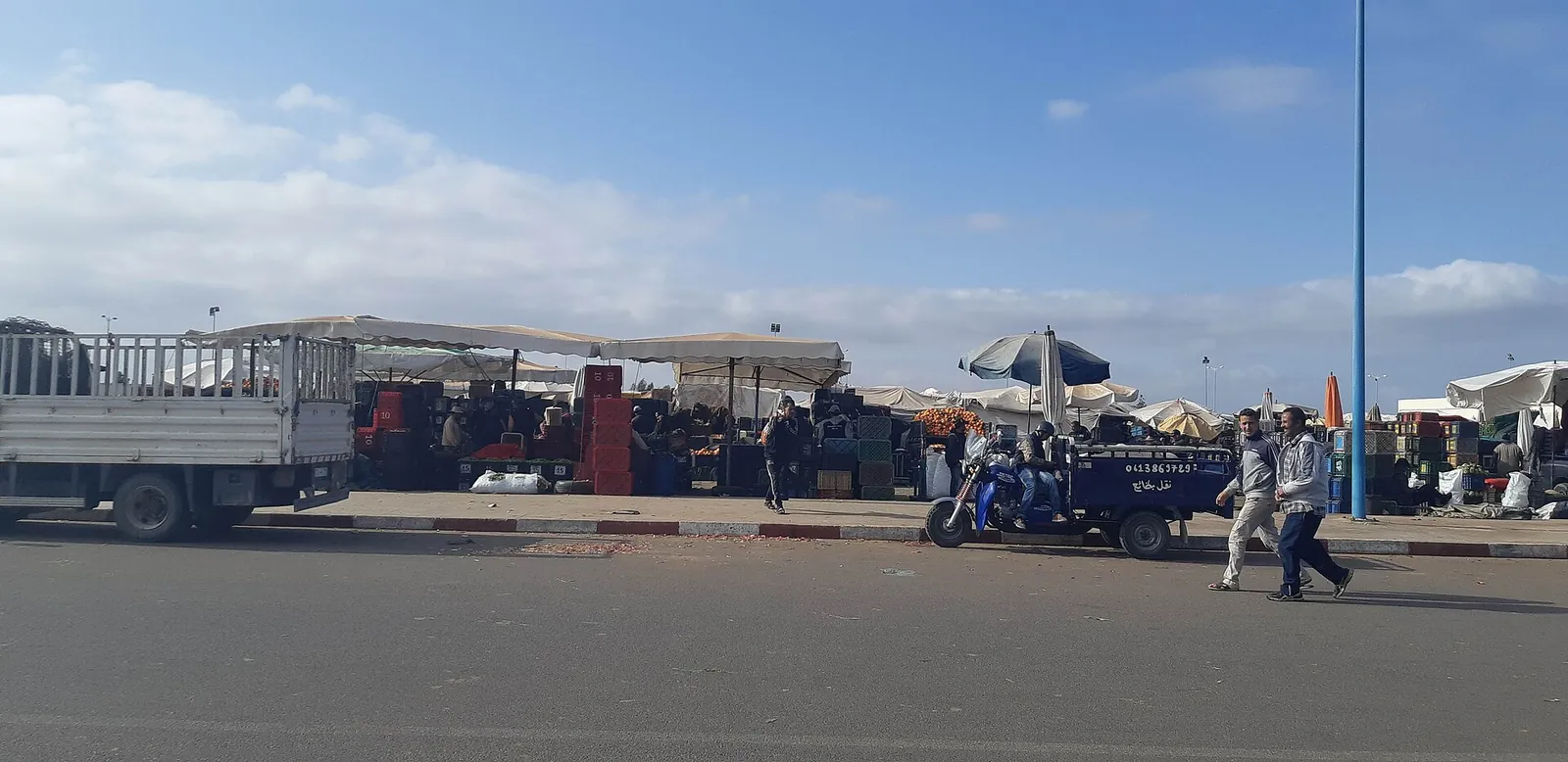
The Tuesday souk of Inezgane
It was a weekly market for centuries and it is still called the Tuesday souk, but like most souks in Morocco it now runs every day, with Tuesday the biggest. It is a Berber market in the old sense: produce from the Souss plain by the crate, mountains of mint and coriander, live chickens, olives, spices, household goods, carpets, pottery, leather shoes, and the silver jewellery for which Inezgane is known across Morocco, with the Tiznit silversmiths selling here as well. Go early, between eight and ten, when it is coolest and fullest. There is nothing arranged for visitors, which means prices are the real ones and nobody follows you.
If Souk El Had is where Agadir shops, Inezgane is where Souk El Had shops.
Souk El Houria
A second, more organised market on the edge of town, with proper halls, a car park and the fruit and vegetable trade that feeds Agadir: Inezgane’s wholesale market is one of the main hubs of the produce trade in the whole country, and the trucks leaving it at dawn carry Souss tomatoes and clementines to Casablanca and beyond. A good place to understand why the plain south of the city is all greenhouses.
Dcheira
Dcheira has a daily market of its own, the Dsheira market, smaller and entirely local: fish from the Agadir port, bread, vegetables, clothes, and workshops where things are mended rather than replaced. It is also where many of the people who run the surf houses of Tamraght and Taghazout grew up, and the cafés around the market serve the best msemen and bissara in the region for a handful of dirhams.
Why go
Because it is the real thing. The villages on the coast are gentle and a little international; here you are in a Moroccan town going about its week, and an hour in the market will teach you more about the Souss than a day of sightseeing. Dress modestly, bring small notes, ask before photographing people, learn to say bslama and shukran, and have lunch at a grill near the souk.
The practical part
Before you go
- Getting there
- About 35 minutes by car from Tamraght, 40 from Taghazout, via Agadir and the Souss bridge; or bus 32 to Agadir and a grand taxi on. Parking at Souk El Houria is easy, at the Tuesday souk less so: arrive early. A small automatic car from Hilal Luxury Cars is ideal for the town.
- When
- Tuesday morning, 8 to 11, for the full souk; any weekday morning for the produce halls.
- Budget
- A kilo of oranges 5 to 10 MAD, a bowl of bissara 5, a silver ring from 100. Entry free.